

whatsapp-logo
User Image

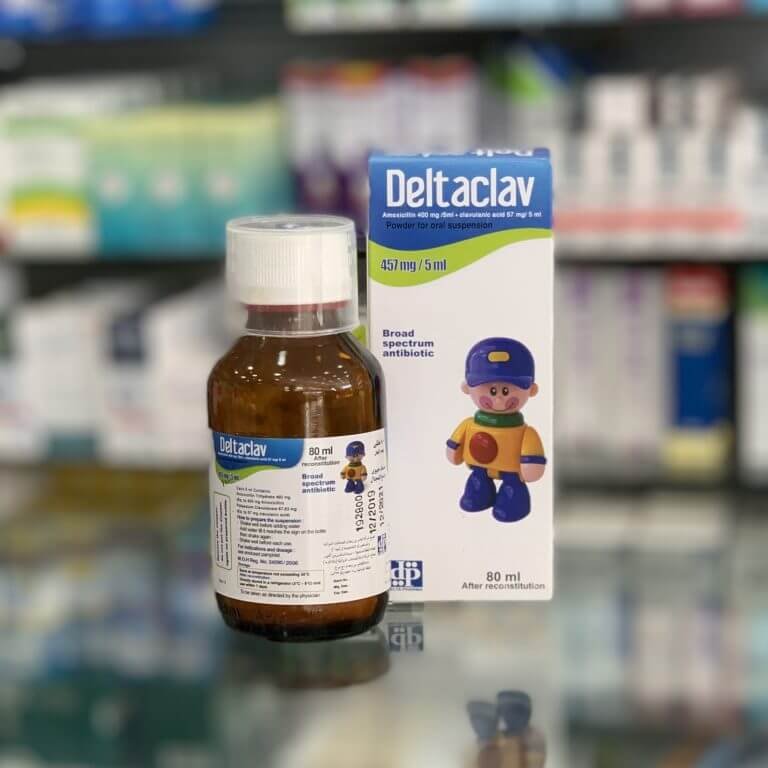
Deltaclav 457 mg / 5 ml powder for suspension preparation 80 ml

Available at Pharmaegy Pharmacy. Use as directed by your doctor.

Tradename: Deltaclav Deltaclav Compound: Each 5 ml of the finished suspension contains: amoxicillin (in the form of amoxicillin trihydrate) 400 mg clavulanic acid (in the form of potassium clavulanate) 57 mg Auxiliary components: xanthan gum, aspartame, succinic acid, colloidal silicon dioxide, hypromellose, orange flavor, caramel flavor, silicon dioxide. Properties: Amoxicillin is a semi-synthetic broad-spectrum antibiotic that is active against many gram-positive and gram-negative microorganisms. At the same time, amoxicillin is subject to degradation by β-lactamases, and therefore the spectrum of activity of amoxicillin does not extend to microorganisms that produce this enzyme. Clavulanic acid, a β-lactamase inhibitor, structurally related to penicillins, has the ability to inactivate a wide range of β-lactamases found in microorganisms resistant to penicillins and cephalosporins. Clavulanic acid is quite effective against plasmid β-lactamases, which most often cause bacterial resistance, and less effective against chromosomal type 1 β-lactamases, which are not inhibited by clavulanic acid. The presence of clavulanic acid in the preparation protects amoxicillin from destruction by enzymes – β-lactamases, which makes it possible to expand the antibacterial spectrum of amoxicillin. Indications: Bacterial infections caused by microorganisms susceptible to the drug: infections of the upper respiratory tract and ENT organs (for example, recurrent tonsillitis, sinusitis, otitis media), usually caused by Streptococcus pneumoniae, Haemophilus influenzae, Moraxella catarrhalis, Streptococcus pyogenes; lower respiratory tract infections: exacerbations of chronic bronchitis, lobar pneumonia and bronchopneumonia, usually caused by Streptococcus pneumoniae, Haemophilus influenzae and Moraxella catarrhalis; infections of the genitourinary tract: cystitis, urethritis, pyelonephritis, infections of the female genital organs, usually caused by species of the family Enterobacteriaceae (mainly Escherichia coli), Staphylococcus saprophyticus and species of the genus Enterococcus; gonorrhea due to Neisseria gonorrhoeae; infections of the skin and soft tissues, usually caused by Staphylococcus aureus, Streptococcus pyogenes and species of the genus Bacteroides; bone and joint infections (eg, osteomyelitis, usually caused by Staphylococcus aureus); if necessary, long-term therapy. Method of administration and dosage: The drug is taken orally. The dosage regimen is set individually depending on the age, body weight, kidney function of the patient, as well as the severity of the infection. For optimal absorption and to reduce possible side effects from the digestive system, it is recommended to take it at the beginning of a meal. The minimum course of antibiotic therapy is 5 days. Treatment should not continue for more than 14 days without reviewing the clinical situation. Children over 3 months old: Frequency rate of admission – 2 times / day Suspension 7: 1 (400 mg / 57 mg in 5 ml) Low doses of 25 mg / kg / day High doses 45 mg / kg / day Low doses of the drug Deltaclav are used to treat infections of the skin and soft tissues, as well as recurrent tonsillitis. High doses of the drug are used to treat diseases such as otitis media, sinusitis, lower respiratory and urinary tract infections, infections of bones and joints. Contraindications: – a history of hypersensitivity to amoxicillin, clavulanic acid, other components of the drug, beta-lactam antibiotics (for example, penicillins, cephalosporins); – previous episodes of jaundice or liver dysfunction when using a combination of amoxicillin with clavulanic acid in history; -Children up to 3 months (for powder for preparation of oral suspension 200 mg / 28.5 mg in 5 ml and 400 mg / 57 mg in 5 ml); – impaired renal function (CC less than 30 ml / min) – for powder for preparation of suspension for oral administration 200 mg / 28.5 mg in 5 ml and 400 mg / 57 mg in 5 ml; -phenylketonuria. With care: abnormal liver function. Precautionary measures: Before starting treatment with the drug, it is necessary to collect a detailed history of previous hypersensitivity reactions to penicillins, cephalosporins or other substances that cause an allergic reaction in the patient. Serious, and sometimes fatal, hypersensitivity reactions (anaphylactic reactions) to penicillins have been described. The risk of such reactions is highest in patients with a history of hypersensitivity reactions to penicillins. In the event of an allergic reaction, it is necessary to discontinue treatment with the drug and initiate an appropriate alternative therapy. Side effects: Infectious and parasitic diseases: often – candidiasis of the skin and mucus dead shells. From the hematopoietic system: rarely – reversible leukopenia (including neutropenia) and reversible thrombocytopenia; very rarely – reversible agranulocytosis and reversible hemolytic anemia, prolongation of prothrombin time and bleeding time, anemia, eosinophilia, thrombocytosis. From the immune system: very rarely – angioedema, anaphylactic reactions, a syndrome similar to serum sickness, allergic vasculitis. From the nervous system: infrequently – dizziness, headache; very rarely – reversible hyperactivity, seizures (seizures can occur in patients with impaired renal function, as well as in those receiving high doses of the drug), insomnia, agitation, anxiety, behavior change. From the digestive system: adults: very often – diarrhea, often – nausea, vomiting; children – often – diarrhea, nausea, vomiting; whole population: nausea is most common with high doses of the drug. From the liver and biliary tract: infrequently – a moderate increase in the activity of ACT and / or ALT (observed in patients receiving therapy with beta-lactam antibiotics, but its clinical significance is unknown). Storage method: At a temperature not higher than 25 degrees. After opening and dilution, store the finished suspension in the refrigerator for no longer than 7 days. Package: Cardboard box holds 80 ml plastic bottle and suspension powder, paper instructions.

Deltaclav 457 mg / 5 ml powder for suspension preparation 80 ml


Description

Tradename: Deltaclav Deltaclav Compound: Each 5 ml of the finished suspension contains: amoxicillin (in the form of amoxicillin trihydrate) 400 mg clavulanic acid (in the form of potassium clavulanate) 57 mg Auxiliary components: xanthan gum, aspartame, succinic acid, colloidal silicon dioxide, hypromellose, orange flavor, caramel flavor, silicon dioxide. Properties: Amoxicillin is a semi-synthetic broad-spectrum antibiotic that is active against many gram-positive and gram-negative microorganisms. At the same time, amoxicillin is subject to degradation by β-lactamases, and therefore the spectrum of activity of amoxicillin does not extend to microorganisms that produce this enzyme. Clavulanic acid, a β-lactamase inhibitor, structurally related to penicillins, has the ability to inactivate a wide range of β-lactamases found in microorganisms resistant to penicillins and cephalosporins. Clavulanic acid is quite effective against plasmid β-lactamases, which most often cause bacterial resistance, and less effective against chromosomal type 1 β-lactamases, which are not inhibited by clavulanic acid. The presence of clavulanic acid in the preparation protects amoxicillin from destruction by enzymes – β-lactamases, which makes it possible to expand the antibacterial spectrum of amoxicillin. Indications: Bacterial infections caused by microorganisms susceptible to the drug: infections of the upper respiratory tract and ENT organs (for example, recurrent tonsillitis, sinusitis, otitis media), usually caused by Streptococcus pneumoniae, Haemophilus influenzae, Moraxella catarrhalis, Streptococcus pyogenes; lower respiratory tract infections: exacerbations of chronic bronchitis, lobar pneumonia and bronchopneumonia, usually caused by Streptococcus pneumoniae, Haemophilus influenzae and Moraxella catarrhalis; infections of the genitourinary tract: cystitis, urethritis, pyelonephritis, infections of the female genital organs, usually caused by species of the family Enterobacteriaceae (mainly Escherichia coli), Staphylococcus saprophyticus and species of the genus Enterococcus; gonorrhea due to Neisseria gonorrhoeae; infections of the skin and soft tissues, usually caused by Staphylococcus aureus, Streptococcus pyogenes and species of the genus Bacteroides; bone and joint infections (eg, osteomyelitis, usually caused by Staphylococcus aureus); if necessary, long-term therapy. Method of administration and dosage: The drug is taken orally. The dosage regimen is set individually depending on the age, body weight, kidney function of the patient, as well as the severity of the infection. For optimal absorption and to reduce possible side effects from the digestive system, it is recommended to take it at the beginning of a meal. The minimum course of antibiotic therapy is 5 days. Treatment should not continue for more than 14 days without reviewing the clinical situation. Children over 3 months old: Frequency rate of admission – 2 times / day Suspension 7: 1 (400 mg / 57 mg in 5 ml) Low doses of 25 mg / kg / day High doses 45 mg / kg / day Low doses of the drug Deltaclav are used to treat infections of the skin and soft tissues, as well as recurrent tonsillitis. High doses of the drug are used to treat diseases such as otitis media, sinusitis, lower respiratory and urinary tract infections, infections of bones and joints. Contraindications: – a history of hypersensitivity to amoxicillin, clavulanic acid, other components of the drug, beta-lactam antibiotics (for example, penicillins, cephalosporins); – previous episodes of jaundice or liver dysfunction when using a combination of amoxicillin with clavulanic acid in history; -Children up to 3 months (for powder for preparation of oral suspension 200 mg / 28.5 mg in 5 ml and 400 mg / 57 mg in 5 ml); – impaired renal function (CC less than 30 ml / min) – for powder for preparation of suspension for oral administration 200 mg / 28.5 mg in 5 ml and 400 mg / 57 mg in 5 ml; -phenylketonuria. With care: abnormal liver function. Precautionary measures: Before starting treatment with the drug, it is necessary to collect a detailed history of previous hypersensitivity reactions to penicillins, cephalosporins or other substances that cause an allergic reaction in the patient. Serious, and sometimes fatal, hypersensitivity reactions (anaphylactic reactions) to penicillins have been described. The risk of such reactions is highest in patients with a history of hypersensitivity reactions to penicillins. In the event of an allergic reaction, it is necessary to discontinue treatment with the drug and initiate an appropriate alternative therapy. Side effects: Infectious and parasitic diseases: often – candidiasis of the skin and mucus dead shells. From the hematopoietic system: rarely – reversible leukopenia (including neutropenia) and reversible thrombocytopenia; very rarely – reversible agranulocytosis and reversible hemolytic anemia, prolongation of prothrombin time and bleeding time, anemia, eosinophilia, thrombocytosis. From the immune system: very rarely – angioedema, anaphylactic reactions, a syndrome similar to serum sickness, allergic vasculitis. From the nervous system: infrequently – dizziness, headache; very rarely – reversible hyperactivity, seizures (seizures can occur in patients with impaired renal function, as well as in those receiving high doses of the drug), insomnia, agitation, anxiety, behavior change. From the digestive system: adults: very often – diarrhea, often – nausea, vomiting; children – often – diarrhea, nausea, vomiting; whole population: nausea is most common with high doses of the drug. From the liver and biliary tract: infrequently – a moderate increase in the activity of ACT and / or ALT (observed in patients receiving therapy with beta-lactam antibiotics, but its clinical significance is unknown). Storage method: At a temperature not higher than 25 degrees. After opening and dilution, store the finished suspension in the refrigerator for no longer than 7 days. Package: Cardboard box holds 80 ml plastic bottle and suspension powder, paper instructions.

Highlights

  • Effective for pain relief and fever reduction..

  • Suitable for adults and children as directed..

  • Fast-acting formula with proven safety profile.

  • Available in various dosage forms and pack sizes.

Directions for use

Use as directed by your doctor.

Storage

Store in a cool, dry place away from sunlight.

Administration Instructions

Follow the prescribed method of administration as advised by your healthcare provider.

Warning

Consult your physician before use.

Precaution

Deltaclav 457 mg / 5 ml powder for suspension preparation 80 ml

EGP 89.00 EGP 112.14 21% off

In stock
  • SKU SKU-0122
  • Pack Size Standard Pack
  • Unit Count 1
  • Country Egypt
  • Free Shipping
    For orders from $50
  • Support 24/7
    Call us any time
  • 100% Safety
    Only secure payments
  • Hot Offers
    Discounts up to 90%