

whatsapp-logo
User Image

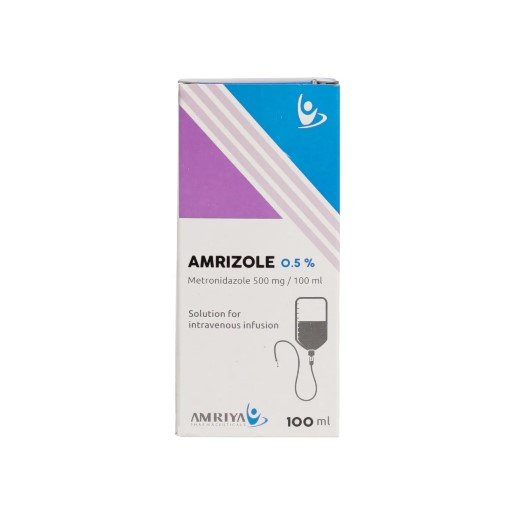
Amrizole 0.5% 500 mg Injection solution 100 ml

Available at Pharmaegy Pharmacy. Use as directed by your doctor.

Amrizole 0.5% 500 mg Injection solution 100 ml Composition (per 100 ml solution): • Metronidazole — 500 mg. Amrizole 0.5% is a sterile infusion solution. The drug has antimicrobial and antiprotozoal activity, mainly used for the treatment of severe anaerobic infections, as well as for the prevention of infectious complications after surgical interventions. Pharmacological properties: • Class: antimicrobial and antiprotozoal agent • Mechanism of action: damages the DNA of susceptible microorganisms, inhibiting their synthesis and causing death. • Effective against: anaerobic bacteria (Bacteroides, Clostridium spp.), as well as protozoa (Trichomonas vaginalis, Giardia lamblia, Entamoeba histolytica). • Pharmacokinetics: rapidly distributes in tissues and body fluids, penetrates the blood-brain barrier and placenta, excreted mainly in urine. Indications: • Amoebiasis. • Pseudomembranous colitis associated with antibiotic use. • Certain sexually transmitted infections, such as trichomoniasis. • Pelvic inflammatory diseases. • Stomach ulcer caused by Helicobacter pylori. • Clostridium difficile — a type of bacteria causing diarrhea and colitis. • Gingivitis or dental infections. • Intra-abdominal infections, such as peritonitis. • Skin infections. • Infections of the female reproductive tract, such as bacterial vaginosis and endometritis. • Blood infections (sepsis). • Bone and joint infections. • Infections of the membranes or tissues of the brain and spinal cord (meningitis). Dosage and administration: Metronidazole 500 mg/100 ml intravenous infusion should be administered intravenously at a rate of approximately 5 ml/minute (or one bag infused over 20–60 minutes). Oral formulations should be switched to as soon as possible. Prevention of postoperative infections caused by anaerobic bacteria: Primarily in the context of abdominal (especially colorectal) and gynecological surgery. Adults: single intravenous dose of 1000–1500 mg 30–60 minutes before surgery or 500 mg immediately before, during, or after surgery, then 500 mg every 8 hours. Children under 12 years: 20–30 mg/kg single dose 1–2 hours before surgery. Newborns with gestational age <40 weeks: 10 mg/kg single dose before surgery. Anaerobic infections: Intravenous route should be used initially if patient symptoms preclude oral therapy. Various regimens are possible. Adults: 1000–1500 mg per day as a single dose or 500 mg every 8 hours. Children from 8 weeks to 12 years: usual daily dose is 20–30 mg/kg/day as a single dose or divided into 7.5 mg/kg every 8 hours. The daily dose may be increased to 40 mg/kg depending on infection severity. Treatment duration is usually 7 days. Children under 8 weeks: 15 mg/kg once daily or divided into 7.5 mg/kg every 12 hours. In newborns with gestational age <40 weeks, metronidazole accumulation may occur during the first week of life, so serum metronidazole concentrations should be monitored after several days of therapy. Duration of treatment: Treatment for seven to ten days should be satisfactory for most patients, but depending on clinical and bacteriological assessments, the physician may decide to extend treatment, for example, to eradicate infection from sites that cannot be drained or that are prone to endogenous reinfection by anaerobic pathogens from the gut, oropharynx, or genital tract. Bacterial vaginosis: Adolescents: 400 mg twice daily for 5–7 days or 2000 mg single dose. Urogenital trichomoniasis: Adults and adolescents: 2000 mg single dose or 200 mg three times daily for 7 days or 400 mg twice daily for 5–7 days. Children <10 years: 40 mg/kg orally single dose or 15–30 mg/kg/day divided into 2–3 doses for 7 days not more than 2000 mg/dose. Giardiasis: 10 years: 2000 mg once daily for 3 days or 400 mg three times daily for 5 days or 500 mg twice daily for 7–10 days Children 7 to 10 years: 1000 mg once daily for 3 days Children 3 to 7 years: 600 to 800 mg once daily for 3 days Children 1 to 3 years: 500 mg once daily for 3 days Alternatively, in mg per kg of body weight: 15–40 mg/kg/day divided into 2–3 doses. Amebiasis: 10 years: 400–800 mg three times daily for 5–10 days Children 7 to 10 years: 200–400 mg three times daily for 5-10 days Children 3 to 7 years: 100–200 mg four times daily for 5-10 days Children 1 to 3 years: 100–200 mg three times daily for 5-10 days Alternatively, doses may be expressed based on body weight: 35 to 50 mg/kg/day divided into 3 doses for 5–10 days, but not more than 2400 mg/day. Eradication of Helicobacter pylori in children: In combination therapy 20 mg/kg/day, but not more than 500 mg twice daily for 7–14 days. Before starting therapy consult official guidelines. Elderly population: Use caution when administering the drug to elderly people, especially at high doses, although information about dose adjustments is limited. Patients with renal impairment: Routine dose adjustment of metronidazole is not required in patients with renal impairment. No routine dose adjustment is needed for patients undergoing intermittent peritoneal dialysis (IPD) or continuous ambulatory peritoneal dialysis (CAPD). However, dose reduction may be necessary if excessive metabolite accumulation is detected. Patients on hemodialysis should be re-dosed immediately after hemodialysis. Patients with severe hepatic impairment: Dose reduction with monitoring of serum drug levels is required in patients with severe hepatic impairment.

Amrizole 0.5% 500 mg Injection solution 100 ml


Description

Amrizole 0.5% 500 mg Injection solution 100 ml Composition (per 100 ml solution): • Metronidazole — 500 mg. Amrizole 0.5% is a sterile infusion solution. The drug has antimicrobial and antiprotozoal activity, mainly used for the treatment of severe anaerobic infections, as well as for the prevention of infectious complications after surgical interventions. Pharmacological properties: • Class: antimicrobial and antiprotozoal agent • Mechanism of action: damages the DNA of susceptible microorganisms, inhibiting their synthesis and causing death. • Effective against: anaerobic bacteria (Bacteroides, Clostridium spp.), as well as protozoa (Trichomonas vaginalis, Giardia lamblia, Entamoeba histolytica). • Pharmacokinetics: rapidly distributes in tissues and body fluids, penetrates the blood-brain barrier and placenta, excreted mainly in urine. Indications: • Amoebiasis. • Pseudomembranous colitis associated with antibiotic use. • Certain sexually transmitted infections, such as trichomoniasis. • Pelvic inflammatory diseases. • Stomach ulcer caused by Helicobacter pylori. • Clostridium difficile — a type of bacteria causing diarrhea and colitis. • Gingivitis or dental infections. • Intra-abdominal infections, such as peritonitis. • Skin infections. • Infections of the female reproductive tract, such as bacterial vaginosis and endometritis. • Blood infections (sepsis). • Bone and joint infections. • Infections of the membranes or tissues of the brain and spinal cord (meningitis). Dosage and administration: Metronidazole 500 mg/100 ml intravenous infusion should be administered intravenously at a rate of approximately 5 ml/minute (or one bag infused over 20–60 minutes). Oral formulations should be switched to as soon as possible. Prevention of postoperative infections caused by anaerobic bacteria: Primarily in the context of abdominal (especially colorectal) and gynecological surgery. Adults: single intravenous dose of 1000–1500 mg 30–60 minutes before surgery or 500 mg immediately before, during, or after surgery, then 500 mg every 8 hours. Children under 12 years: 20–30 mg/kg single dose 1–2 hours before surgery. Newborns with gestational age <40 weeks: 10 mg/kg single dose before surgery. Anaerobic infections: Intravenous route should be used initially if patient symptoms preclude oral therapy. Various regimens are possible. Adults: 1000–1500 mg per day as a single dose or 500 mg every 8 hours. Children from 8 weeks to 12 years: usual daily dose is 20–30 mg/kg/day as a single dose or divided into 7.5 mg/kg every 8 hours. The daily dose may be increased to 40 mg/kg depending on infection severity. Treatment duration is usually 7 days. Children under 8 weeks: 15 mg/kg once daily or divided into 7.5 mg/kg every 12 hours. In newborns with gestational age <40 weeks, metronidazole accumulation may occur during the first week of life, so serum metronidazole concentrations should be monitored after several days of therapy. Duration of treatment: Treatment for seven to ten days should be satisfactory for most patients, but depending on clinical and bacteriological assessments, the physician may decide to extend treatment, for example, to eradicate infection from sites that cannot be drained or that are prone to endogenous reinfection by anaerobic pathogens from the gut, oropharynx, or genital tract. Bacterial vaginosis: Adolescents: 400 mg twice daily for 5–7 days or 2000 mg single dose. Urogenital trichomoniasis: Adults and adolescents: 2000 mg single dose or 200 mg three times daily for 7 days or 400 mg twice daily for 5–7 days. Children <10 years: 40 mg/kg orally single dose or 15–30 mg/kg/day divided into 2–3 doses for 7 days not more than 2000 mg/dose. Giardiasis: 10 years: 2000 mg once daily for 3 days or 400 mg three times daily for 5 days or 500 mg twice daily for 7–10 days Children 7 to 10 years: 1000 mg once daily for 3 days Children 3 to 7 years: 600 to 800 mg once daily for 3 days Children 1 to 3 years: 500 mg once daily for 3 days Alternatively, in mg per kg of body weight: 15–40 mg/kg/day divided into 2–3 doses. Amebiasis: 10 years: 400–800 mg three times daily for 5–10 days Children 7 to 10 years: 200–400 mg three times daily for 5-10 days Children 3 to 7 years: 100–200 mg four times daily for 5-10 days Children 1 to 3 years: 100–200 mg three times daily for 5-10 days Alternatively, doses may be expressed based on body weight: 35 to 50 mg/kg/day divided into 3 doses for 5–10 days, but not more than 2400 mg/day. Eradication of Helicobacter pylori in children: In combination therapy 20 mg/kg/day, but not more than 500 mg twice daily for 7–14 days. Before starting therapy consult official guidelines. Elderly population: Use caution when administering the drug to elderly people, especially at high doses, although information about dose adjustments is limited. Patients with renal impairment: Routine dose adjustment of metronidazole is not required in patients with renal impairment. No routine dose adjustment is needed for patients undergoing intermittent peritoneal dialysis (IPD) or continuous ambulatory peritoneal dialysis (CAPD). However, dose reduction may be necessary if excessive metabolite accumulation is detected. Patients on hemodialysis should be re-dosed immediately after hemodialysis. Patients with severe hepatic impairment: Dose reduction with monitoring of serum drug levels is required in patients with severe hepatic impairment.

Highlights

  • Effective for pain relief and fever reduction..

  • Suitable for adults and children as directed..

  • Fast-acting formula with proven safety profile.

  • Available in various dosage forms and pack sizes.

Directions for use

Use as directed by your doctor.

Storage

Store in a cool, dry place away from sunlight.

Administration Instructions

Follow the prescribed method of administration as advised by your healthcare provider.

Warning

Consult your physician before use.

Precaution

Amrizole 0.5% 500 mg Injection solution 100 ml

EGP 47.00 EGP 59.22 21% off

In stock
  • SKU SKU-0278
  • Pack Size Standard Pack
  • Unit Count 1
  • Country Egypt
  • Free Shipping
    For orders from $50
  • Support 24/7
    Call us any time
  • 100% Safety
    Only secure payments
  • Hot Offers
    Discounts up to 90%