

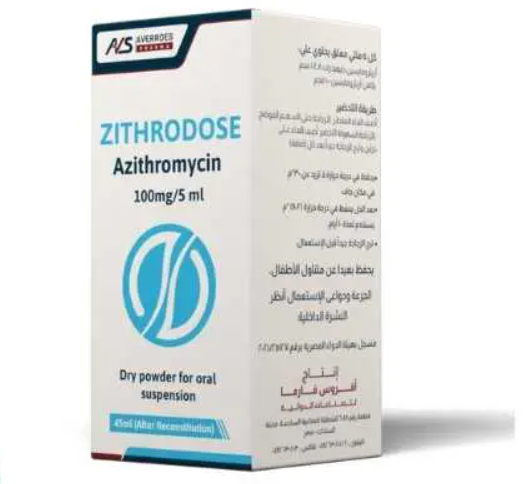
Zithrodose 100 mg/5 ml, 60 ml
Available at Pharmaegy Pharmacy. Use as directed by your doctor.
Zithrodose Azithromycin 100mg/5 ml Dry powder for oral suspension 60ml (After Reconstitution) Compositions: Each 5 ml suspension contains: 104.8 mg Azithromycin dihydrate equivalent to 100 mg Azithromycin Description: Zithrodose (azithromycin) is a macrolide antibacterial drug indicated for the treatment of patients with mild to moderate infections caused by susceptible strains of the designated microorganisms in the specific conditions listed below. Indications: Adult Patients • Acute bacterial exacerbations of chronic bronchitis due to Haemophilus influenzae, Moraxella catarrhalis, or Streptococcus pneumoniae. • Acute bacterial sinusitis due to Haemophilus influenzae, Moraxella catarrhalis. Or Streptococcus pneumoniae. • Community-acquired pneumonia due to Chlamydophila pneumoniae, Haemophilus influenzae, Mycoplasma pneumoniae, or Streptococcus pneumoniae in patients appropriate for oral therapy. • Pharyngitis/tonsillitis caused by Streptococcus pyogenes as an alternative to first-line therapy in individuals who cannot use first-line therapy. • Uncomplicated skin and skin structure infections due to Staphylococcus aureus, Streptococcus pyogenes, or Streptococcus agalactiae. • Urethritis and cervicitis due to Chlamydia trachomatis or Neisseria gonorrhoeae. • Genital ulcer disease in men due to Haemophilus ducreyi (chancroid). Due to the small number of women included in clinical trials, the efficacy of azithromycin in the treatment of chancroid in women has not been established. Pediatric Patients: • Acute otitis media (> 6 months of age) caused by Haemophilus influenzae, Moraxella catarrhalis, or Streptococcus pneumonia. • Community-acquired pneumonia (> 6 months of age) due to Chlamydophila pneumoniae, Haemophilus influenzae, Mycoplasma pneumonia, or Streptococcus pneumoniae in patients appropriate for oral therapy • Pharyngitis/tonsillitis (> 2 years of age) caused by Streptococcus pyogenes as an alternative to first-line therapy in individuals who cannot use first-line therapy. Dosage and Method of Administration: Zithrodose for oral suspension can be taken with or without food. Pediatric population: Acute otitis media: 30 mg/kg as a single dose or 10 mg/kg once daily for 3 days or 10 mg/kg as a single dose on Day 1 followed by 5 mg/kg/day on Days 2 through 5. Acute bacterial sinusitis: 10 mg/kg once daily for 3 days. Community-acquired pneumonia: 10 mg/kg as a single dose on Day 1 followed by 5 mg/kg once daily on Days 2 through 5. Pharyngitis/tonsillitis: 12 mg/kg once daily for 5 days. OTITIS MEDIA AND COMMUNITY-ACQUIRED PNEUMONIA: (5-Day Regimen): Dosing Calculated on 10 mg/kg/day Day 1 and 5 mg/kg/day Days 2 to 5. OTITIS MEDIA AND ACUTE BACTERIAL SINUSITIS: (3-Day Regimon): Dosing calculated on 10 mg/kg/day. Contraindications: • Hypersensitivity Zithrodose is contraindicated in patients with known hypersensitivity to azithromycin, erythromycin, any macrolide or ketolide drug • Hepatic Dysfunction: Zithrodose is contraindicated in patients with a history of cholestatic jaundice/hepatic dysfunction associated with prior use of azithromycin. Azithromycin should not be used in patients with pneumonia who are judged to be inappropriate for oral therapy because of moderate to severe illness or risk factors such as any of the following: • patients with cystic fibrosis • patients with nosocomial infections • patients with known or suspected bacteremia • patients requiring hospitalization • elderly or debilitated patients, or • Patients with significant underlying health problems that may compromise their ability to respond to their illness (including immunodeficiency or functional asplenia). Precautions: -Hypersensitivity If an allergic reaction occurs, the drug should be discontinued and appropriate therapy should be instituted. - Hepatotoxicity Abnormal liver function, hepatitis, cholestatic jaundice, hepatic necrosis, and hepatic failure have been reported, some of which have resulted in death. Discontinue azithromycin immediately if signs and symptoms of hepatitis occur. -Infantile Hypertrophic Pyloric Stenosis (IHPS) Following the use of azithromycin in neonates (treatment up to 42 days of life), IHPS has been reported. -Clostridium difficile-Associated Diarrhea (CDAD) Clostridium difficile-associated diarrhea has been reported with use of nearly all antibacterial agents, including Zithrodose, and may range in severity from mild diarrhea to fatal colitis. -Exacerbation of Myasthenia Gravis Exacerbation of symptoms of myasthenia gravis and new onset of myasthenic syndrome have been reported in patients receiving azithromycin therapy. -This drug should not be used in patients with phenyl ketone urea as it contain aspartame. Side Effects: -Potentially serious adverse reactions of angioedema and cholestatic jaundice were reported. -Diarrhea, abdominal pain, vomiting, nausea, and rash. -Gastrointestinal: Dyspepsia, constipation, anorexia, enteritis, flatulence, gastritis, jaundice, loose stools. -Hematologic and Lymphatic: Anemia and leukopenia. -Nervous System: Headache, hyperkinesia, dizziness, agitation, nervousness, and insomnia. -General: Fever, face edema, fatigue, fungal infection, malaise, and pain. -Allergic: Rash and allergic reaction. -Respiratory: Cough, pharyngitis, pleural effusion, and rhinitis. -Skin and Appendages: Eczema, fungal dermatitis, pruritus, sweating, urticaria, and vesiculobullous rash. -Special Senses: Conjunctivitis. tients for which a causal relationship may not be established include: -Gastrointestinal: Anorexia, constipation, dyspepsia, flatulence, vomiting/diarrhea, pseudomembranous colitis, pancreatitis, oral candidiasis, pyloric stenosis, and reports of tongue discoloration. -General: Asthenia, paresthesia, fatigue, malaise, and anaphylaxis. -Genitourinary: Interstitial nephritis and acute renal failure and vaginitis. -Hematopoietic: Thrombocytopenia. -Liver/Biliary: Abnormal liver function, hepatitis, cholestatic jaundice, hepatic necrosis, and hepatic failure. -Nervous System: Convulsions, dizziness/vertigo, headache, somnolence. Reconstitution Directions: Add distilled water to the mark in the bottle (for ease in preparation, add the Water in two portions and shake well after each addition) Storage Method: Store at temperature not exceeding 30°C in dry place. After reconstitution: store at temperature from (2-8)°C used for 10 days. Keep out of reach of children Package: A carton box contains a bottle with powder for oral solution 60 ml.

Zithrodose 100 mg/5 ml, 60 ml
Description
Zithrodose Azithromycin 100mg/5 ml Dry powder for oral suspension 60ml (After Reconstitution) Compositions: Each 5 ml suspension contains: 104.8 mg Azithromycin dihydrate equivalent to 100 mg Azithromycin Description: Zithrodose (azithromycin) is a macrolide antibacterial drug indicated for the treatment of patients with mild to moderate infections caused by susceptible strains of the designated microorganisms in the specific conditions listed below. Indications: Adult Patients • Acute bacterial exacerbations of chronic bronchitis due to Haemophilus influenzae, Moraxella catarrhalis, or Streptococcus pneumoniae. • Acute bacterial sinusitis due to Haemophilus influenzae, Moraxella catarrhalis. Or Streptococcus pneumoniae. • Community-acquired pneumonia due to Chlamydophila pneumoniae, Haemophilus influenzae, Mycoplasma pneumoniae, or Streptococcus pneumoniae in patients appropriate for oral therapy. • Pharyngitis/tonsillitis caused by Streptococcus pyogenes as an alternative to first-line therapy in individuals who cannot use first-line therapy. • Uncomplicated skin and skin structure infections due to Staphylococcus aureus, Streptococcus pyogenes, or Streptococcus agalactiae. • Urethritis and cervicitis due to Chlamydia trachomatis or Neisseria gonorrhoeae. • Genital ulcer disease in men due to Haemophilus ducreyi (chancroid). Due to the small number of women included in clinical trials, the efficacy of azithromycin in the treatment of chancroid in women has not been established. Pediatric Patients: • Acute otitis media (> 6 months of age) caused by Haemophilus influenzae, Moraxella catarrhalis, or Streptococcus pneumonia. • Community-acquired pneumonia (> 6 months of age) due to Chlamydophila pneumoniae, Haemophilus influenzae, Mycoplasma pneumonia, or Streptococcus pneumoniae in patients appropriate for oral therapy • Pharyngitis/tonsillitis (> 2 years of age) caused by Streptococcus pyogenes as an alternative to first-line therapy in individuals who cannot use first-line therapy. Dosage and Method of Administration: Zithrodose for oral suspension can be taken with or without food. Pediatric population: Acute otitis media: 30 mg/kg as a single dose or 10 mg/kg once daily for 3 days or 10 mg/kg as a single dose on Day 1 followed by 5 mg/kg/day on Days 2 through 5. Acute bacterial sinusitis: 10 mg/kg once daily for 3 days. Community-acquired pneumonia: 10 mg/kg as a single dose on Day 1 followed by 5 mg/kg once daily on Days 2 through 5. Pharyngitis/tonsillitis: 12 mg/kg once daily for 5 days. OTITIS MEDIA AND COMMUNITY-ACQUIRED PNEUMONIA: (5-Day Regimen): Dosing Calculated on 10 mg/kg/day Day 1 and 5 mg/kg/day Days 2 to 5. OTITIS MEDIA AND ACUTE BACTERIAL SINUSITIS: (3-Day Regimon): Dosing calculated on 10 mg/kg/day. Contraindications: • Hypersensitivity Zithrodose is contraindicated in patients with known hypersensitivity to azithromycin, erythromycin, any macrolide or ketolide drug • Hepatic Dysfunction: Zithrodose is contraindicated in patients with a history of cholestatic jaundice/hepatic dysfunction associated with prior use of azithromycin. Azithromycin should not be used in patients with pneumonia who are judged to be inappropriate for oral therapy because of moderate to severe illness or risk factors such as any of the following: • patients with cystic fibrosis • patients with nosocomial infections • patients with known or suspected bacteremia • patients requiring hospitalization • elderly or debilitated patients, or • Patients with significant underlying health problems that may compromise their ability to respond to their illness (including immunodeficiency or functional asplenia). Precautions: -Hypersensitivity If an allergic reaction occurs, the drug should be discontinued and appropriate therapy should be instituted. - Hepatotoxicity Abnormal liver function, hepatitis, cholestatic jaundice, hepatic necrosis, and hepatic failure have been reported, some of which have resulted in death. Discontinue azithromycin immediately if signs and symptoms of hepatitis occur. -Infantile Hypertrophic Pyloric Stenosis (IHPS) Following the use of azithromycin in neonates (treatment up to 42 days of life), IHPS has been reported. -Clostridium difficile-Associated Diarrhea (CDAD) Clostridium difficile-associated diarrhea has been reported with use of nearly all antibacterial agents, including Zithrodose, and may range in severity from mild diarrhea to fatal colitis. -Exacerbation of Myasthenia Gravis Exacerbation of symptoms of myasthenia gravis and new onset of myasthenic syndrome have been reported in patients receiving azithromycin therapy. -This drug should not be used in patients with phenyl ketone urea as it contain aspartame. Side Effects: -Potentially serious adverse reactions of angioedema and cholestatic jaundice were reported. -Diarrhea, abdominal pain, vomiting, nausea, and rash. -Gastrointestinal: Dyspepsia, constipation, anorexia, enteritis, flatulence, gastritis, jaundice, loose stools. -Hematologic and Lymphatic: Anemia and leukopenia. -Nervous System: Headache, hyperkinesia, dizziness, agitation, nervousness, and insomnia. -General: Fever, face edema, fatigue, fungal infection, malaise, and pain. -Allergic: Rash and allergic reaction. -Respiratory: Cough, pharyngitis, pleural effusion, and rhinitis. -Skin and Appendages: Eczema, fungal dermatitis, pruritus, sweating, urticaria, and vesiculobullous rash. -Special Senses: Conjunctivitis. tients for which a causal relationship may not be established include: -Gastrointestinal: Anorexia, constipation, dyspepsia, flatulence, vomiting/diarrhea, pseudomembranous colitis, pancreatitis, oral candidiasis, pyloric stenosis, and reports of tongue discoloration. -General: Asthenia, paresthesia, fatigue, malaise, and anaphylaxis. -Genitourinary: Interstitial nephritis and acute renal failure and vaginitis. -Hematopoietic: Thrombocytopenia. -Liver/Biliary: Abnormal liver function, hepatitis, cholestatic jaundice, hepatic necrosis, and hepatic failure. -Nervous System: Convulsions, dizziness/vertigo, headache, somnolence. Reconstitution Directions: Add distilled water to the mark in the bottle (for ease in preparation, add the Water in two portions and shake well after each addition) Storage Method: Store at temperature not exceeding 30°C in dry place. After reconstitution: store at temperature from (2-8)°C used for 10 days. Keep out of reach of children Package: A carton box contains a bottle with powder for oral solution 60 ml.
Highlights
-
Effective for pain relief and fever reduction..
-
Suitable for adults and children as directed..
-
Fast-acting formula with proven safety profile.
-
Available in various dosage forms and pack sizes.
Directions for use
Use as directed by your doctor.
Storage
Store in a cool, dry place away from sunlight.
Administration Instructions
Follow the prescribed method of administration as advised by your healthcare provider.
Warning
Consult your physician before use.
Precaution
Zithrodose 100 mg/5 ml, 60 ml
-
Free Shipping
For orders from $50 -
Support 24/7
Call us any time -
100% Safety
Only secure payments -
Hot Offers
Discounts up to 90%