

whatsapp-logo
User Image

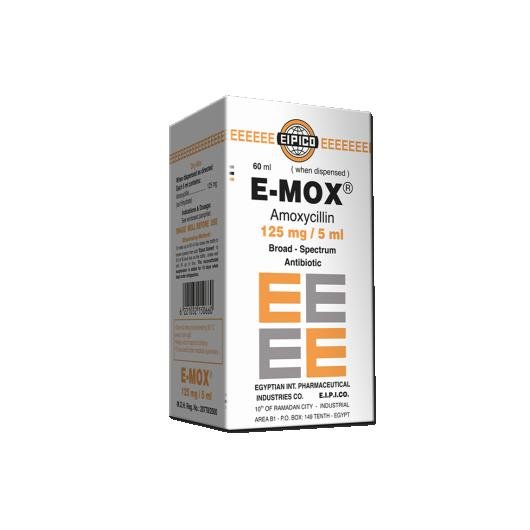
E-Mox susp 125 mg/5 ml, 80 ml

Available at Pharmaegy Pharmacy. Use as directed by your doctor.

E-MOX Powder for oral suspension Amoxicillin 125 mg / 5 ml Broad – Spectrum Antibiotic Composition: Each 5 ml suspension contains: Amoxicillin trihydrate 143.5 mg eq. to Amoxicillin 125 mg Indications: E-MOX is indicated for the treatment of the following infections in adults and children: -Acute otitis media. -Acute bacterial sinusitis. -Acute streptococcal tonsillitis and pharyngitis. -Acute exacerbations of chronic bronchitis. -Community acquired pneumonia. -Acute cystitis. -Asymptomatic bacteriuria in pregnancy. -Acute pyelonephritis. -Typhoid and paratyphoid fevers. -Dental abscess with spreading cellulitis. -Prosthetic joint infections. -Helicobacter pylori eradication. -Lyme disease. -E-MOX Capsules and Dry Mix are also indicated for the prophylaxis of endocarditis. Dosage and Administration: Dosage: The dose of E-MOX that is selected to treat an individual infection should take into account: - The expected pathogens and their likely susceptibility to antibacterial agents. - The severity and the site of the infection. - The age, weight and renal function of the patient; as shown in insert leaflet. The duration of therapy should be determined by the type of infection and the response of the patient, and should generally be as short as possible. Some infections require longer periods of treatment. In patients receiving Peritoneal dialysis: Amoxicillin maximum 500 mg/day. Hepatic impairment: Dose with caution and monitor hepatic function at regular intervals. Administration: E-MOX is for oral use. Absorption of E-MOX is unimpaired by food. Instructions on Reconstitution of the Medicinal product Before Administration: Check cap seal is intact before use. Invert and shake bottle to loosen powder. To prepare, add potable water and shake until all contents are dispersed. Contraindications: Hypersensitivity to the active substance, to any of the penicillins or to any of the excipients. History of a severe immediate hypersensitivity reaction (eg. anaphylaxis) to another beta-lactam agent (e.g. a cephalosporin, carbapenem or monobactam). Precautions: -Hypersensitivity reactions: Severe cutaneous adverse reactions (SCARs, including Stevens-Johnson syndrome SS), toxic epidermal necrolysis (TEN), drug reaction with eosinophilia and systemic symptoms (DRESS, and acute generalised exanthematous pustulosis (AGEP) have been reported in association with beta lactam anibiotics. Do tone intias e therapy wish -MOX, careful enquiry should be made concerning previous hypersensitiy ractions to penicillins, cephalosporins or other beta-lactam agents. -Non-susceptible microorganisms: E-MOX is not suitable for the treatment of some types of infection unless the pathogen i already documented and known to be susceptible, or there is a very high likelihood that pathogen would be suitable for treatment with amoxicillin. This particularly applies when considering the treatment of patients with urinary tract infections and severe infections of the ear, nose and throat. -Convulsions: Convulsions may occur in patients with impaired renal function, or in those receiving high doses, or in patients with predisposing factors (e.g. history of seizures, treated epilepsy or meningeal disorders). -Renal impairment: In patients with renal impairment, the dose should be adjusted according to the degree of impairment. -Skin reactions: The occurrence at the treatment initiation of a feverish generalised erythema associated with pustula may be a symptom of acute generalised exanthematous pustulosis. This reaction requires amoxicillin discontinuation and contraindicates any subsequent administration. -E-MOX should be avoided if infectious mononucleosis is suspected since the occurrence of a mortilliform rash has been associated with this condition following the use of amoxicillin. -Jarisch-Herxheimer reaction: The Jarisch-Herxheimer reaction has been seen following amoxicillin treatment of Lyme disease. It results directly from the bactericidal activity of amoxicillin on the causative bacteria of Lyme disease, the spirochaete Borrelia burgdorferi. Patients should be reassured that this is a common and usually self-limiting consequence of antibiotic treatment of Lyme disease. -Overgrowth of non-susceptible microorganisms: Prolonged use may occasionally result in overgrowth of non-susceptible microorganisms. -Antibiotic-associated colitis has been reported with nearly all antibacterial agents and may range in severity from mild to life-threatening. -Prolonged therapy: Periodie assessment of organ system functions; including renal, hepatic and haematopoietic function is advisable during prolonged therapy. Elevated liver enzymes and changes in blood counts have been reported. -Anticoagulants: Prolongation of prothrombin time has been reported rarely in patients receiving amoxicillin. Appropriate monitoring should be undertaken when anticoagulants are prescribed concomitantly. Adjustments in the dose of oral anticoagulants may be necessary to maintain the desired level of anticoagulation. -Crystalluria: In patients with reduced urine output, crystalluria has been observed very rarely, predominantly with parenteral therapy. During the administration of high doses of amoxicillin, it is advisable to maintain adequate fluid intake and urinary output in order to reduce the possibility of amoxicillin crystalluria. In patients with bladder catheters, a regular check of patency should be maintained. -Interference with diagnostie tests: Elevated serum and urinary levels of amoxicillin are likely to affect certain laboratory tests. Due to the high urinary concentrations of amoxicillin, false positive readings are common with chemical methods. -E-MOX Dry Mix contains sucrose and lactose. Patients with rare hereditary problems of fructose intolerance. -Clostridivides difficile Associated Diamhoea (CDAD) has been reported with nearly all antibacterial agents, including amoxicillin, and may range in severity from mild diarhea to fatal colitis. Prgnancy: E-MOX may be used in pregnancy when the potential benefits outweigh the potential risks associated with treatment. Lactation: Amoxicillin is excreted into breast milk in small quantities with the possible risk of sensitisation. Consequently, diarrhoea and fungus infection of the mucous membranes are possible in the breastfed infant, so that breastfeeding might have to be discontinued. E-MOX should only be used during breastfeeding after benefit/risk assessment by the physician in charge. Side Effects: The most commonly reported adverse drug reactions (ADRs) are dianhoea, nausea and skin rash. The ADRs derived from clinical studies and post-marketing surveillance with amoxicillin, presented by Medical Dictionary for Regulatory Activities (MedDRA) System Organ Class are listed below. Very rare: Mucocutaneous candidiasis. Blood and Lymphatic System disorders: Very rare: Reversible leucopenia (including severe neutropenia or agranulocytosis, reversible thrombocytopenia and haemolytic anemia, prolongation of bleeding time and prothrombin time. Immune System disorders: Very rare: Severe allergic reactions, including angioneurotic oedema, anaphylaxis, serum sickness and hypersensitivity vasculitis. Not known: Jarisch-Herxheimer reaction. Nervous System disorders: Very rare: Hyperkinesia, dizziness and convulsions. Gastrointestinal disorders: Common: Diarrhoea and nausea. Uncommon: Vomiting Post-marketing Data: Very rare: Antibiotic associated colitis (including pseudomembraneous colitis and haemorrhagic colitis), black hairy tongue, superficial tooth discolouration (with Oral Suspensions). Hepatobiliary disorders: Very rare: Hepatitis, cholestatic jaundice, a moderate rise in AST and/or ALT. Skin and Subcutaneous tissue disorders: Clinical Trial Data: Common: Skin rash. Uncommon: Urticaria and pruritus. Post-marketing Data: Very rare: Skin reactions such as erythema multiforme, Stevens-Johnson Syndrome, Toxic Epidermal Necrolysis, bullous and exfoliative dermatitis, Acute Generalised Exanthematous Pustulosis (AGEP), and Drug Reaction with Eosinophilia and Systemic Symptoms (DRESS). Renal and Urinary tract disorders: Very rare: Interstitial nephritis, crystalluria. Storage Method: Store in a dry place at a temperature not exceeding 30°C. After reconstitution: Store at refrigerated temperature (2-8°C) and use within 10 days. Keep out of reach of children. Package: A carton box contains a bottle with powder and insert leaflet.

E-Mox susp 125 mg/5 ml, 80 ml


Description

E-MOX Powder for oral suspension Amoxicillin 125 mg / 5 ml Broad – Spectrum Antibiotic Composition: Each 5 ml suspension contains: Amoxicillin trihydrate 143.5 mg eq. to Amoxicillin 125 mg Indications: E-MOX is indicated for the treatment of the following infections in adults and children: -Acute otitis media. -Acute bacterial sinusitis. -Acute streptococcal tonsillitis and pharyngitis. -Acute exacerbations of chronic bronchitis. -Community acquired pneumonia. -Acute cystitis. -Asymptomatic bacteriuria in pregnancy. -Acute pyelonephritis. -Typhoid and paratyphoid fevers. -Dental abscess with spreading cellulitis. -Prosthetic joint infections. -Helicobacter pylori eradication. -Lyme disease. -E-MOX Capsules and Dry Mix are also indicated for the prophylaxis of endocarditis. Dosage and Administration: Dosage: The dose of E-MOX that is selected to treat an individual infection should take into account: - The expected pathogens and their likely susceptibility to antibacterial agents. - The severity and the site of the infection. - The age, weight and renal function of the patient; as shown in insert leaflet. The duration of therapy should be determined by the type of infection and the response of the patient, and should generally be as short as possible. Some infections require longer periods of treatment. In patients receiving Peritoneal dialysis: Amoxicillin maximum 500 mg/day. Hepatic impairment: Dose with caution and monitor hepatic function at regular intervals. Administration: E-MOX is for oral use. Absorption of E-MOX is unimpaired by food. Instructions on Reconstitution of the Medicinal product Before Administration: Check cap seal is intact before use. Invert and shake bottle to loosen powder. To prepare, add potable water and shake until all contents are dispersed. Contraindications: Hypersensitivity to the active substance, to any of the penicillins or to any of the excipients. History of a severe immediate hypersensitivity reaction (eg. anaphylaxis) to another beta-lactam agent (e.g. a cephalosporin, carbapenem or monobactam). Precautions: -Hypersensitivity reactions: Severe cutaneous adverse reactions (SCARs, including Stevens-Johnson syndrome SS), toxic epidermal necrolysis (TEN), drug reaction with eosinophilia and systemic symptoms (DRESS, and acute generalised exanthematous pustulosis (AGEP) have been reported in association with beta lactam anibiotics. Do tone intias e therapy wish -MOX, careful enquiry should be made concerning previous hypersensitiy ractions to penicillins, cephalosporins or other beta-lactam agents. -Non-susceptible microorganisms: E-MOX is not suitable for the treatment of some types of infection unless the pathogen i already documented and known to be susceptible, or there is a very high likelihood that pathogen would be suitable for treatment with amoxicillin. This particularly applies when considering the treatment of patients with urinary tract infections and severe infections of the ear, nose and throat. -Convulsions: Convulsions may occur in patients with impaired renal function, or in those receiving high doses, or in patients with predisposing factors (e.g. history of seizures, treated epilepsy or meningeal disorders). -Renal impairment: In patients with renal impairment, the dose should be adjusted according to the degree of impairment. -Skin reactions: The occurrence at the treatment initiation of a feverish generalised erythema associated with pustula may be a symptom of acute generalised exanthematous pustulosis. This reaction requires amoxicillin discontinuation and contraindicates any subsequent administration. -E-MOX should be avoided if infectious mononucleosis is suspected since the occurrence of a mortilliform rash has been associated with this condition following the use of amoxicillin. -Jarisch-Herxheimer reaction: The Jarisch-Herxheimer reaction has been seen following amoxicillin treatment of Lyme disease. It results directly from the bactericidal activity of amoxicillin on the causative bacteria of Lyme disease, the spirochaete Borrelia burgdorferi. Patients should be reassured that this is a common and usually self-limiting consequence of antibiotic treatment of Lyme disease. -Overgrowth of non-susceptible microorganisms: Prolonged use may occasionally result in overgrowth of non-susceptible microorganisms. -Antibiotic-associated colitis has been reported with nearly all antibacterial agents and may range in severity from mild to life-threatening. -Prolonged therapy: Periodie assessment of organ system functions; including renal, hepatic and haematopoietic function is advisable during prolonged therapy. Elevated liver enzymes and changes in blood counts have been reported. -Anticoagulants: Prolongation of prothrombin time has been reported rarely in patients receiving amoxicillin. Appropriate monitoring should be undertaken when anticoagulants are prescribed concomitantly. Adjustments in the dose of oral anticoagulants may be necessary to maintain the desired level of anticoagulation. -Crystalluria: In patients with reduced urine output, crystalluria has been observed very rarely, predominantly with parenteral therapy. During the administration of high doses of amoxicillin, it is advisable to maintain adequate fluid intake and urinary output in order to reduce the possibility of amoxicillin crystalluria. In patients with bladder catheters, a regular check of patency should be maintained. -Interference with diagnostie tests: Elevated serum and urinary levels of amoxicillin are likely to affect certain laboratory tests. Due to the high urinary concentrations of amoxicillin, false positive readings are common with chemical methods. -E-MOX Dry Mix contains sucrose and lactose. Patients with rare hereditary problems of fructose intolerance. -Clostridivides difficile Associated Diamhoea (CDAD) has been reported with nearly all antibacterial agents, including amoxicillin, and may range in severity from mild diarhea to fatal colitis. Prgnancy: E-MOX may be used in pregnancy when the potential benefits outweigh the potential risks associated with treatment. Lactation: Amoxicillin is excreted into breast milk in small quantities with the possible risk of sensitisation. Consequently, diarrhoea and fungus infection of the mucous membranes are possible in the breastfed infant, so that breastfeeding might have to be discontinued. E-MOX should only be used during breastfeeding after benefit/risk assessment by the physician in charge. Side Effects: The most commonly reported adverse drug reactions (ADRs) are dianhoea, nausea and skin rash. The ADRs derived from clinical studies and post-marketing surveillance with amoxicillin, presented by Medical Dictionary for Regulatory Activities (MedDRA) System Organ Class are listed below. Very rare: Mucocutaneous candidiasis. Blood and Lymphatic System disorders: Very rare: Reversible leucopenia (including severe neutropenia or agranulocytosis, reversible thrombocytopenia and haemolytic anemia, prolongation of bleeding time and prothrombin time. Immune System disorders: Very rare: Severe allergic reactions, including angioneurotic oedema, anaphylaxis, serum sickness and hypersensitivity vasculitis. Not known: Jarisch-Herxheimer reaction. Nervous System disorders: Very rare: Hyperkinesia, dizziness and convulsions. Gastrointestinal disorders: Common: Diarrhoea and nausea. Uncommon: Vomiting Post-marketing Data: Very rare: Antibiotic associated colitis (including pseudomembraneous colitis and haemorrhagic colitis), black hairy tongue, superficial tooth discolouration (with Oral Suspensions). Hepatobiliary disorders: Very rare: Hepatitis, cholestatic jaundice, a moderate rise in AST and/or ALT. Skin and Subcutaneous tissue disorders: Clinical Trial Data: Common: Skin rash. Uncommon: Urticaria and pruritus. Post-marketing Data: Very rare: Skin reactions such as erythema multiforme, Stevens-Johnson Syndrome, Toxic Epidermal Necrolysis, bullous and exfoliative dermatitis, Acute Generalised Exanthematous Pustulosis (AGEP), and Drug Reaction with Eosinophilia and Systemic Symptoms (DRESS). Renal and Urinary tract disorders: Very rare: Interstitial nephritis, crystalluria. Storage Method: Store in a dry place at a temperature not exceeding 30°C. After reconstitution: Store at refrigerated temperature (2-8°C) and use within 10 days. Keep out of reach of children. Package: A carton box contains a bottle with powder and insert leaflet.

Highlights

  • Effective for pain relief and fever reduction..

  • Suitable for adults and children as directed..

  • Fast-acting formula with proven safety profile.

  • Available in various dosage forms and pack sizes.

Directions for use

Use as directed by your doctor.

Storage

Store in a cool, dry place away from sunlight.

Administration Instructions

Follow the prescribed method of administration as advised by your healthcare provider.

Warning

Consult your physician before use.

Precaution

E-Mox susp 125 mg/5 ml, 80 ml

EGP 11.00 EGP 14.74 25% off

In stock
  • SKU SKU-0036
  • Pack Size Standard Pack
  • Unit Count 1
  • Country Egypt
  • Free Shipping
    For orders from $50
  • Support 24/7
    Call us any time
  • 100% Safety
    Only secure payments
  • Hot Offers
    Discounts up to 90%