

whatsapp-logo
User Image

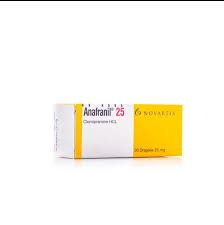
Anafronil 25 mg 30 tablets

Available at Pharmaegy Pharmacy. Use as directed by your doctor.

Anafronil 25 mg clomipramine hydrochloride 25 mg Active substances: Clomipramine hydrochloride 25 mg Indications: Adults Depression of varying etiology and symptomatology: • Endogenous, reactive, neurotic, organic, masked and involutional depression • Depression associated with schizophrenia and psychopathy • Depressive syndromes due to presenility and senility, chronic painful conditions and chronic somatic diseases • Depressive moods of a reactive, neurotic or psychopathic nature Additional uses: • Phobias and panic attacks • Obsessive-compulsive disorders. • Cataplexy accompanying narcolepsy. • Chronic painful conditions (in particular cancer pain, neuropathic pain and idiopathic pain syndrome) Children and adolescents: Obsessive-compulsive disorders. Nocturnal enuresis in patients aged 6 years and over, once organic causes have been ruled out. Anafronil should not be used in these indications in children and adolescents aged <18 years. Dosage/Administration: The dosage schedule should be determined individually and adapted to the patient's condition. The sustained-release Divitabs may be halved, but not chewed. They are divisible into two equal halves, enabling highly individual dosing. The optimum dose should be continued as maintenance therapy once established. In patients with a history of recurrent depression, maintenance therapy for a longer duration may be indicated depending on the individual risk of relapse. Depression, obsessive-compulsive disorders and phobias Stant treatment in adults with one coated tablet of 25 mg 2-3 times daily or one sustained-release Divitab of 75 mg once daily (preferably in the evening). Panic attacks, agoraphobia Start with 1 coated tablet of 10 mg daily in adults. Depending on tolerability, increase the dose until the desired response is obtained. The required daily dose varies greatly from patient to patient and is between 25 mg and 100 mg. If necessary, it may be increased to 150 mg. Children aged over 12 years: 1-3 coated tablets of 25 mg Contraindications: -Hypersensitivity to clomipramine or any of the excipients of Anafronil or cross-sensitivity to tricyclic antidepressants of the dibenzazepine group. -Antiarrhythmics such as quinidine and propafenone, which are potent CYP2D6 inhibitors, must not be combined with tricyclic antidepressants. -Concomitant treatment with a selective, reversible MAO-A inhibitor such as moclobemide or a non-selective, reversible MAO inhibitor such as linezolid is also contraindicated. Use is also contraindicated in patients with: • acute intoxication with CNS depressants such as hypnotics, analgesics or psychotropic agents or with alcohol • acute urinary retention • acute delirium • untreated narrow-angle glaucoma • prostatic hypertrophy with residual urine retention • pyloric stenosis • paralytic ileus. Warnings and precautions: Risk of suicide: -Depression is associated with an elevated risk of suicidal ideation, self-harm and completed suicide. Suicidal deation and suicidal behaviour may also be exacerbated during antidepressant treatment. -Anafronil should not be used to treat depression in children and adolescents aged under 18 years. -Other psychiatric effects in many patients with panic attacks, symptoms of anxiety are exacerbated at the start of treatment with Anafronil. This paradoxical increase in anxiety is particularly pronounced during the first few days of treatment and generally subsides within 2 weeks. -Convulsions: Tricyclic antidepressants lower the convulsion threshold. Anafronil must therefore be used with extreme caution in patients with epilepsy or other predisposing factors, e.g. brain damage of varying etiology, co-administration of neuroleptics, withdrawal of alcohol or of medicinal products with anticonvulsant properties (e.g. benzodiazepines). The occurrence of seizures is apparently dose-dependent. The recommended total daily dose must therefore not be exceeded. -Antichollnergic effects: Due to its anticholinergic properties Anafronil must be used with caution in patients with a history of increased intraocular pressure, narrow-angle glaucoma or urinary retention (e.g. due to prostate disease). -Serotonin syndrome: Due to the risk of serotonergic toxic reactions it is advisable to adhere to the recommended dose. -Cardiovascular disorders: Anafronil should be administered with particular caution in patients with cardiovascular disorders, especially those with cardiovascular insufficiency, conduction disorders (e.g. grade I-III AV block) or arrhythmias. -A blood pressure test is indicated before starting treatment as patients with hypotension or circulatory instability may react with a drop in blood pressure. -Hypersensitivity reactions: Isolated cases of anaphylactic shock have been observed. Pregnancy and Breast-feeding: Neonates whose mothers had taken tricyclic antidepressants up to birth showed symptoms such as respiratory disorders, lethargy, colic, increased irritability, hypotension or hypertension, trembling, convulsions and epileptic seizures during the first few hours or days. To avoid such symptoms, Anafronil should be stopped at least 7 weeks before the estimated date of delivery, It is medically justified. Breast-feeding: As the active substance is excreted in breast milk, either breast-feeding should be discontinued or the medicinal product should be gradually withdrawn. Side Effects: Most adverse effects are usually transient, disappearing as treatment continues or following dose reduction. Endocrine disorders Very common: Dry mouth, sweating, micturition disorders. Common: Hot flushes, mydriasis. Metabolism and nutrition disorders Very common: Weight increase, Psychiatric disorders Very common: Somnolence, transient fatigue, inner restlessness, increased appetite. Common: Confusion accompanied by disorientation and hallucinations (particularly in geriatric patients and patients with Parkinson's disease), anxiety, agitation, sleep disorders, mania, hypomania, aggressiveness, memory disorders, yawning, behavioral changes, insomnia, nightmares, increased depression, concentration disorders. Nervous system disorders Very common: Dizziness, tremor, headache, myoclonus. Common: Delirium, speech disorders, paraesthesia, muscle weakness, muscle hypertonia. Eye disorders Very common: Accommodation disorders, blurred vision. Ear and labyrinth disorders Common: Tinnitus. Vascular disorders Common: Orthostatic hypotension. Gastrointestinal disorders Very common: Constipation. Common: Nausea. Hepatobiliary disorders Common: Increased transaminases. Skin and subcutaneous tissue disorders Common: Allergic skin reactions (exanthema, urticaria), photosensitivity, pruritus. Reproductive system and breast disorders Common: Libido disorders and potency disturbances. General disorders The following uncommon symptoms have occurred following abrupt treatment discontinuation or dose reduction: Nausea, vomiting, abdominal pain, diarrhea, insomnia, headache, nervousness, anxiety. Storage Method: Store at a temperature not exceeding 30C. Keep out of the reach of children. Package: A carton box contains 3 blisters, 10 tablets each and an insert leaflet.

Anafronil 25 mg 30 tablets


Description

Anafronil 25 mg clomipramine hydrochloride 25 mg Active substances: Clomipramine hydrochloride 25 mg Indications: Adults Depression of varying etiology and symptomatology: • Endogenous, reactive, neurotic, organic, masked and involutional depression • Depression associated with schizophrenia and psychopathy • Depressive syndromes due to presenility and senility, chronic painful conditions and chronic somatic diseases • Depressive moods of a reactive, neurotic or psychopathic nature Additional uses: • Phobias and panic attacks • Obsessive-compulsive disorders. • Cataplexy accompanying narcolepsy. • Chronic painful conditions (in particular cancer pain, neuropathic pain and idiopathic pain syndrome) Children and adolescents: Obsessive-compulsive disorders. Nocturnal enuresis in patients aged 6 years and over, once organic causes have been ruled out. Anafronil should not be used in these indications in children and adolescents aged <18 years. Dosage/Administration: The dosage schedule should be determined individually and adapted to the patient's condition. The sustained-release Divitabs may be halved, but not chewed. They are divisible into two equal halves, enabling highly individual dosing. The optimum dose should be continued as maintenance therapy once established. In patients with a history of recurrent depression, maintenance therapy for a longer duration may be indicated depending on the individual risk of relapse. Depression, obsessive-compulsive disorders and phobias Stant treatment in adults with one coated tablet of 25 mg 2-3 times daily or one sustained-release Divitab of 75 mg once daily (preferably in the evening). Panic attacks, agoraphobia Start with 1 coated tablet of 10 mg daily in adults. Depending on tolerability, increase the dose until the desired response is obtained. The required daily dose varies greatly from patient to patient and is between 25 mg and 100 mg. If necessary, it may be increased to 150 mg. Children aged over 12 years: 1-3 coated tablets of 25 mg Contraindications: -Hypersensitivity to clomipramine or any of the excipients of Anafronil or cross-sensitivity to tricyclic antidepressants of the dibenzazepine group. -Antiarrhythmics such as quinidine and propafenone, which are potent CYP2D6 inhibitors, must not be combined with tricyclic antidepressants. -Concomitant treatment with a selective, reversible MAO-A inhibitor such as moclobemide or a non-selective, reversible MAO inhibitor such as linezolid is also contraindicated. Use is also contraindicated in patients with: • acute intoxication with CNS depressants such as hypnotics, analgesics or psychotropic agents or with alcohol • acute urinary retention • acute delirium • untreated narrow-angle glaucoma • prostatic hypertrophy with residual urine retention • pyloric stenosis • paralytic ileus. Warnings and precautions: Risk of suicide: -Depression is associated with an elevated risk of suicidal ideation, self-harm and completed suicide. Suicidal deation and suicidal behaviour may also be exacerbated during antidepressant treatment. -Anafronil should not be used to treat depression in children and adolescents aged under 18 years. -Other psychiatric effects in many patients with panic attacks, symptoms of anxiety are exacerbated at the start of treatment with Anafronil. This paradoxical increase in anxiety is particularly pronounced during the first few days of treatment and generally subsides within 2 weeks. -Convulsions: Tricyclic antidepressants lower the convulsion threshold. Anafronil must therefore be used with extreme caution in patients with epilepsy or other predisposing factors, e.g. brain damage of varying etiology, co-administration of neuroleptics, withdrawal of alcohol or of medicinal products with anticonvulsant properties (e.g. benzodiazepines). The occurrence of seizures is apparently dose-dependent. The recommended total daily dose must therefore not be exceeded. -Antichollnergic effects: Due to its anticholinergic properties Anafronil must be used with caution in patients with a history of increased intraocular pressure, narrow-angle glaucoma or urinary retention (e.g. due to prostate disease). -Serotonin syndrome: Due to the risk of serotonergic toxic reactions it is advisable to adhere to the recommended dose. -Cardiovascular disorders: Anafronil should be administered with particular caution in patients with cardiovascular disorders, especially those with cardiovascular insufficiency, conduction disorders (e.g. grade I-III AV block) or arrhythmias. -A blood pressure test is indicated before starting treatment as patients with hypotension or circulatory instability may react with a drop in blood pressure. -Hypersensitivity reactions: Isolated cases of anaphylactic shock have been observed. Pregnancy and Breast-feeding: Neonates whose mothers had taken tricyclic antidepressants up to birth showed symptoms such as respiratory disorders, lethargy, colic, increased irritability, hypotension or hypertension, trembling, convulsions and epileptic seizures during the first few hours or days. To avoid such symptoms, Anafronil should be stopped at least 7 weeks before the estimated date of delivery, It is medically justified. Breast-feeding: As the active substance is excreted in breast milk, either breast-feeding should be discontinued or the medicinal product should be gradually withdrawn. Side Effects: Most adverse effects are usually transient, disappearing as treatment continues or following dose reduction. Endocrine disorders Very common: Dry mouth, sweating, micturition disorders. Common: Hot flushes, mydriasis. Metabolism and nutrition disorders Very common: Weight increase, Psychiatric disorders Very common: Somnolence, transient fatigue, inner restlessness, increased appetite. Common: Confusion accompanied by disorientation and hallucinations (particularly in geriatric patients and patients with Parkinson's disease), anxiety, agitation, sleep disorders, mania, hypomania, aggressiveness, memory disorders, yawning, behavioral changes, insomnia, nightmares, increased depression, concentration disorders. Nervous system disorders Very common: Dizziness, tremor, headache, myoclonus. Common: Delirium, speech disorders, paraesthesia, muscle weakness, muscle hypertonia. Eye disorders Very common: Accommodation disorders, blurred vision. Ear and labyrinth disorders Common: Tinnitus. Vascular disorders Common: Orthostatic hypotension. Gastrointestinal disorders Very common: Constipation. Common: Nausea. Hepatobiliary disorders Common: Increased transaminases. Skin and subcutaneous tissue disorders Common: Allergic skin reactions (exanthema, urticaria), photosensitivity, pruritus. Reproductive system and breast disorders Common: Libido disorders and potency disturbances. General disorders The following uncommon symptoms have occurred following abrupt treatment discontinuation or dose reduction: Nausea, vomiting, abdominal pain, diarrhea, insomnia, headache, nervousness, anxiety. Storage Method: Store at a temperature not exceeding 30C. Keep out of the reach of children. Package: A carton box contains 3 blisters, 10 tablets each and an insert leaflet.

Highlights

  • .

  • .

Directions for use

Storage

Administration Instructions

Warning

Precaution

Anafronil 25 mg 30 tablets

EGP 66.00 EGP 88.44 25% off

In stock
  • SKU
  • Pack Size
  • Unit Count
  • Country
  • Free Shipping
    For orders from $50
  • Support 24/7
    Call us any time
  • 100% Safety
    Only secure payments
  • Hot Offers
    Discounts up to 90%