

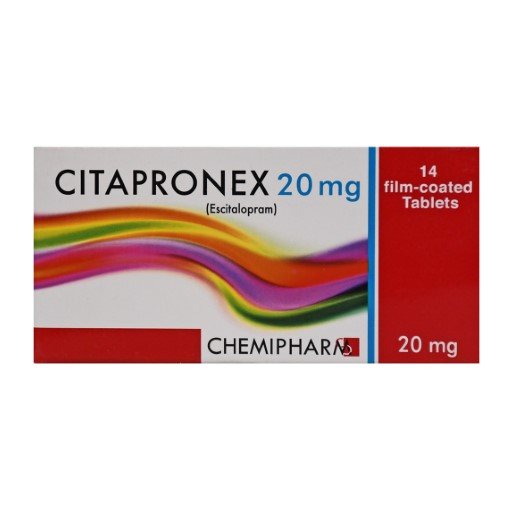
Citapronex 20 mg 14 tablets
Available at Pharmaegy Pharmacy. Use as directed by your doctor.
Citapronex 20 mg 14 tablets Composition: Each film coated tablet contains: Escitalopram Oxalate 25.56 mg eq. to 20 mg Escitalopram. WARNINGS: SUICIDALITY and ANTIDEPRESSANT DRUGS: -Antidepressants increased the risk compared to placebo of suicidal thinking and behavior (suicidality) in children, adolescents, and young adults in short-term studies of major depressive disorder (MDD) and other psychiatric disorders. -Anyone considering the use of Escitalopram or any other antidepressant in a child, adolescent, or young adult must balance this risk with the clinical need. -Short-term studies did not show an increase in the risk of suicidality with antidepressants compared to placebo in adults beyond age 24; -there was a reduction in risk with antidepressants compared to placebo in adults aged 65 and older. -Depression and certain other psychiatric disorders are themselves associated with increases in the risk of suicide. -Patients of all ages who are started on antidepressant therapy should be monitored appropriately and observed closely for clinical worsening, suicidality, or unusual changes in behavior. -Escitalopram is not approved for use in pediatric patients less than 12 years of age. Indication: -Major Depressive Disorder: Citapronex Tablets are indicated for the acute and maintenance treatment of major depressive disorder in adults and in adolescents 12 to 17 years of age. -Generalized Anxiety Disorder: Citapronex Tablets are indicated for the acute treatment of Generalized Anxiety Disorder (GAD) in adults. Dosage and Administration: Escitalopram tablets should be administered once daily, in the morning or evening, with or without food. Major Depressive Disorder Initial Treatment: Adolescents: The recommended dose of Citapronex Tablets is 10 mg once daily. if the dose is increased to 20 mg, this should occur after a minimum of three weeks. Adults: The recommended dose of Citapronex Tablets is 10 mg once daily. A fixed-dose trial of Citapronex Tablets demonstrated the effectiveness of both 10 mg and 20 mg of Citaprone Tablets but failed to demonstrate a greater benefit of 20 mg over 10 mg If the dose is increased to 20 mg, this should occur after a minimum of one week. Generalized Anxiety Disorder Initial Treatment: Adults: The recommended starting dose of Citapronex Tablets is 10 mg once daily. If the dose is increased to 20 mg, this should occur after a minimum of one week. Special Populations: 10 mg/day is the recommended dose for most elderly patients and patients with hepatic impairment. No dosage adjustment is necessary for patients with mild or moderate renal impairment. Citapronex Tablets should be used with caution in patients with severe renal impairment. Contraindications: -Do not use of citalopram with other medicinal products known to prolong the QT interval -Citalopram is contraindication in patients with congenital long QT syndrome -Escitalopram is traindication in patients with come us at MAOs intended to treat psychiatric disorders with Citapronex or within 14 days of stopping treatment with Citapronex is contraindicated because of an increased risk of serotonin syndrome. -Pimozide: Concomitant use in patients taking pimozide is contraindicated. -Hypersensitivity to Escitalopram or citalopram: Escitalopram is contraindicated in patients with a hypersensitivity to Escitalopram or citalopram or any of the inactive ingredients in Escitalopram tablets. Precaution: SSRIs/SNRis may increase the risk of postpartum haemorrhage, Fertility, pregnancy and lactation: Observational data indicate an increased risk (less than 2-fold) of postpartum haemorrhage following SSRI/SNRI exposure within the month prior to birth. Talk to your doctor before taking Citapronex, especially if you have: • History of bleeding disorders, or if you are pregnant pregnancy: if you take Citapronex near the end of your pregnancy there may be an increased risk of heavy vaginal bleeding shortly after birth, especially if you have a history of bleeding disorders. -Reproductive system and breast disorders: Heavy vaginal bleeding shortly after birth (postpartum haemorrhage). -Clinical Worsening and Suicide Risk: Patients with major depressive disorder (MDD), both adult and pediatric, may experience worsening of their depression and/or the emergence of suicidal ideation and behavior (suicidality) or unusual changes in behavior, and this risk may persist until significant remission occurs. -Seizures: Citapronex should be introduced with care in patients with a history of seizure disorder. -Activation of Manin/Hypomania: case of hypomania has been reported in association with Escitalopram treatment. As with all drugs effective in the treatment of major depressive disorder, Citapronex should be used cautiously in patients with a history of mania. -Hyponatremia: Hyponatremia may occur as a result of treatment with SSRIs and SNRIs, including Escitalopram. Elderly patients may be at greater risk of developing hyponatremia with SSRIs and SNRIs. Also, patients taking diuretics or who are otherwise volume depleted may be at greater risk. -Abnormal Bleeding: SSRIs and SNRIs, including Escitalopram, may increase the risk of bleeding events. Concomitant use of aspirin, nonsteroidal anti-inflammatory drugs, warfarin, and other anticoagulants may add to the risk. also others, such as linezolid and the intravenous methylene blue). Serotonin Syndrome: The development of a potentially life-threatening serotonin syndrome has been reported with SNRis and SSRis, including Escitalopram, alone but particularly with concomitant use of other serotonergic drugs (including triptans, tricyclic of: antidepressants, fentanyl, lithium, tramadol, tryptophan, buspirone, amphetamines, and St. John's Wort) and with drugs that impair two metabolism of serotonin (in particular, MAOls, both those intended to treat psychiatric disorders and also others, such as linezolid and the intravenous methylene blue). -Use in Patients with Concomitant Illness • Patients with congestive heart failure • bradyurhythmías, myocardial infarction or predisposition to hypokalemia or hypomagnesaemia because of concomitant illness or drugs, are at higher risk of developing torsade de pointes. • Health care professionals should consider more frequent electrocardiogram (ECG) monitoring in patients with congestive heart failure. bradyarrhythmias • Hypokalemia and hypomagnesaemia should be corrected before administering citalopram. electrolytes should be monitored as. clinically indicated • Patients should contact a healthcare professional immediately if they experience signs and symptoms of an abnormal heart rate or rhythm while taking citalopram • Patients should be advised not to stop taking citalopram or change or reduce the dose without first consulting their healthcare professiona. Side Effects: Adverse Events Associated with Discontinuation of Treatment: Major Depressive Disorder, Generalized Anxiety Disorder Autonomic Nervous System Disorders: Dry Mouth, Sweating Increased Central & Peripheral Nervous System Disorders: Dizziness General: Influenza-like Symptoms, Fatigue Gastrointestinal Disorders: Nausea, Diarhea, Constipation Indigestion, Abdominal Pain, Vomiting Abdominal Pain Flatulence, Toothache Respiratory System Disorders: Rhinitis, Sinusitis Psychiatric Disorders: Insomnia, Somnolence, Appetite Decreased, Abnormal Appetite, Libido Decreased Urogenital: Ejaculation Disorder, Impotence, Anorgasmia, Menstrual Disorder In Females Only: Libido Decreased, Anorgasmia In Males Only: Ejaculation Disorder (primarily ejaculatory delay), Libido Decreased. Impotence Other Reactions Observed During the Premarketing Evaluation of Citapronex Curdiovasculur • bypertension, palpitation, Central and Peripherol Nervous System Dinordom - light-hoaded feeling, migraine. Gastrointestinal Disorders • abdominal cramp, heurtburn, gustroenteritis. Goneral + allery, cheut pain, fever, hot usher, pain in limb. Metabolie and Numinonal Disordors - Incroased waight. Mumulenketal System Disordora - ashralgia, myalgla aw wiffnens. Psychiarie Disordos • appetits inorased, conseniration impaired, irritability. Reproduotive Drendor/Pemule : tonurual crumps, monsirunl diuorder. Hespiratory System Diserdars bronchits coughst naud couseston, simes congestion. Pregnancy: There are no adequate and well-controlled studies in, pregnant women; therefore, Citapronex should be used during pregnancy only if the potential benefit justifies the potential risk to the fetus. Nursing Mothers: Citapronex is excreted in human breast milk. Caution should be exercised and breastfeeding infants should be observed for adverse reactions when Escitalopram is administered to a nursing woman. Storage Method: Store at a temperature not exceeding 30 C. Keep out from reach of children. Package: A carton box contains 14 tablets and insert leaflet.

Citapronex 20 mg 14 tablets
Description
Citapronex 20 mg 14 tablets Composition: Each film coated tablet contains: Escitalopram Oxalate 25.56 mg eq. to 20 mg Escitalopram. WARNINGS: SUICIDALITY and ANTIDEPRESSANT DRUGS: -Antidepressants increased the risk compared to placebo of suicidal thinking and behavior (suicidality) in children, adolescents, and young adults in short-term studies of major depressive disorder (MDD) and other psychiatric disorders. -Anyone considering the use of Escitalopram or any other antidepressant in a child, adolescent, or young adult must balance this risk with the clinical need. -Short-term studies did not show an increase in the risk of suicidality with antidepressants compared to placebo in adults beyond age 24; -there was a reduction in risk with antidepressants compared to placebo in adults aged 65 and older. -Depression and certain other psychiatric disorders are themselves associated with increases in the risk of suicide. -Patients of all ages who are started on antidepressant therapy should be monitored appropriately and observed closely for clinical worsening, suicidality, or unusual changes in behavior. -Escitalopram is not approved for use in pediatric patients less than 12 years of age. Indication: -Major Depressive Disorder: Citapronex Tablets are indicated for the acute and maintenance treatment of major depressive disorder in adults and in adolescents 12 to 17 years of age. -Generalized Anxiety Disorder: Citapronex Tablets are indicated for the acute treatment of Generalized Anxiety Disorder (GAD) in adults. Dosage and Administration: Escitalopram tablets should be administered once daily, in the morning or evening, with or without food. Major Depressive Disorder Initial Treatment: Adolescents: The recommended dose of Citapronex Tablets is 10 mg once daily. if the dose is increased to 20 mg, this should occur after a minimum of three weeks. Adults: The recommended dose of Citapronex Tablets is 10 mg once daily. A fixed-dose trial of Citapronex Tablets demonstrated the effectiveness of both 10 mg and 20 mg of Citaprone Tablets but failed to demonstrate a greater benefit of 20 mg over 10 mg If the dose is increased to 20 mg, this should occur after a minimum of one week. Generalized Anxiety Disorder Initial Treatment: Adults: The recommended starting dose of Citapronex Tablets is 10 mg once daily. If the dose is increased to 20 mg, this should occur after a minimum of one week. Special Populations: 10 mg/day is the recommended dose for most elderly patients and patients with hepatic impairment. No dosage adjustment is necessary for patients with mild or moderate renal impairment. Citapronex Tablets should be used with caution in patients with severe renal impairment. Contraindications: -Do not use of citalopram with other medicinal products known to prolong the QT interval -Citalopram is contraindication in patients with congenital long QT syndrome -Escitalopram is traindication in patients with come us at MAOs intended to treat psychiatric disorders with Citapronex or within 14 days of stopping treatment with Citapronex is contraindicated because of an increased risk of serotonin syndrome. -Pimozide: Concomitant use in patients taking pimozide is contraindicated. -Hypersensitivity to Escitalopram or citalopram: Escitalopram is contraindicated in patients with a hypersensitivity to Escitalopram or citalopram or any of the inactive ingredients in Escitalopram tablets. Precaution: SSRIs/SNRis may increase the risk of postpartum haemorrhage, Fertility, pregnancy and lactation: Observational data indicate an increased risk (less than 2-fold) of postpartum haemorrhage following SSRI/SNRI exposure within the month prior to birth. Talk to your doctor before taking Citapronex, especially if you have: • History of bleeding disorders, or if you are pregnant pregnancy: if you take Citapronex near the end of your pregnancy there may be an increased risk of heavy vaginal bleeding shortly after birth, especially if you have a history of bleeding disorders. -Reproductive system and breast disorders: Heavy vaginal bleeding shortly after birth (postpartum haemorrhage). -Clinical Worsening and Suicide Risk: Patients with major depressive disorder (MDD), both adult and pediatric, may experience worsening of their depression and/or the emergence of suicidal ideation and behavior (suicidality) or unusual changes in behavior, and this risk may persist until significant remission occurs. -Seizures: Citapronex should be introduced with care in patients with a history of seizure disorder. -Activation of Manin/Hypomania: case of hypomania has been reported in association with Escitalopram treatment. As with all drugs effective in the treatment of major depressive disorder, Citapronex should be used cautiously in patients with a history of mania. -Hyponatremia: Hyponatremia may occur as a result of treatment with SSRIs and SNRIs, including Escitalopram. Elderly patients may be at greater risk of developing hyponatremia with SSRIs and SNRIs. Also, patients taking diuretics or who are otherwise volume depleted may be at greater risk. -Abnormal Bleeding: SSRIs and SNRIs, including Escitalopram, may increase the risk of bleeding events. Concomitant use of aspirin, nonsteroidal anti-inflammatory drugs, warfarin, and other anticoagulants may add to the risk. also others, such as linezolid and the intravenous methylene blue). Serotonin Syndrome: The development of a potentially life-threatening serotonin syndrome has been reported with SNRis and SSRis, including Escitalopram, alone but particularly with concomitant use of other serotonergic drugs (including triptans, tricyclic of: antidepressants, fentanyl, lithium, tramadol, tryptophan, buspirone, amphetamines, and St. John's Wort) and with drugs that impair two metabolism of serotonin (in particular, MAOls, both those intended to treat psychiatric disorders and also others, such as linezolid and the intravenous methylene blue). -Use in Patients with Concomitant Illness • Patients with congestive heart failure • bradyurhythmías, myocardial infarction or predisposition to hypokalemia or hypomagnesaemia because of concomitant illness or drugs, are at higher risk of developing torsade de pointes. • Health care professionals should consider more frequent electrocardiogram (ECG) monitoring in patients with congestive heart failure. bradyarrhythmias • Hypokalemia and hypomagnesaemia should be corrected before administering citalopram. electrolytes should be monitored as. clinically indicated • Patients should contact a healthcare professional immediately if they experience signs and symptoms of an abnormal heart rate or rhythm while taking citalopram • Patients should be advised not to stop taking citalopram or change or reduce the dose without first consulting their healthcare professiona. Side Effects: Adverse Events Associated with Discontinuation of Treatment: Major Depressive Disorder, Generalized Anxiety Disorder Autonomic Nervous System Disorders: Dry Mouth, Sweating Increased Central & Peripheral Nervous System Disorders: Dizziness General: Influenza-like Symptoms, Fatigue Gastrointestinal Disorders: Nausea, Diarhea, Constipation Indigestion, Abdominal Pain, Vomiting Abdominal Pain Flatulence, Toothache Respiratory System Disorders: Rhinitis, Sinusitis Psychiatric Disorders: Insomnia, Somnolence, Appetite Decreased, Abnormal Appetite, Libido Decreased Urogenital: Ejaculation Disorder, Impotence, Anorgasmia, Menstrual Disorder In Females Only: Libido Decreased, Anorgasmia In Males Only: Ejaculation Disorder (primarily ejaculatory delay), Libido Decreased. Impotence Other Reactions Observed During the Premarketing Evaluation of Citapronex Curdiovasculur • bypertension, palpitation, Central and Peripherol Nervous System Dinordom - light-hoaded feeling, migraine. Gastrointestinal Disorders • abdominal cramp, heurtburn, gustroenteritis. Goneral + allery, cheut pain, fever, hot usher, pain in limb. Metabolie and Numinonal Disordors - Incroased waight. Mumulenketal System Disordora - ashralgia, myalgla aw wiffnens. Psychiarie Disordos • appetits inorased, conseniration impaired, irritability. Reproduotive Drendor/Pemule : tonurual crumps, monsirunl diuorder. Hespiratory System Diserdars bronchits coughst naud couseston, simes congestion. Pregnancy: There are no adequate and well-controlled studies in, pregnant women; therefore, Citapronex should be used during pregnancy only if the potential benefit justifies the potential risk to the fetus. Nursing Mothers: Citapronex is excreted in human breast milk. Caution should be exercised and breastfeeding infants should be observed for adverse reactions when Escitalopram is administered to a nursing woman. Storage Method: Store at a temperature not exceeding 30 C. Keep out from reach of children. Package: A carton box contains 14 tablets and insert leaflet.
Highlights
-
.
-
.
-
-
Directions for use
Storage
Administration Instructions
Warning
Precaution
Citapronex 20 mg 14 tablets
-
Free Shipping
For orders from $50 -
Support 24/7
Call us any time -
100% Safety
Only secure payments -
Hot Offers
Discounts up to 90%