

whatsapp-logo
User Image

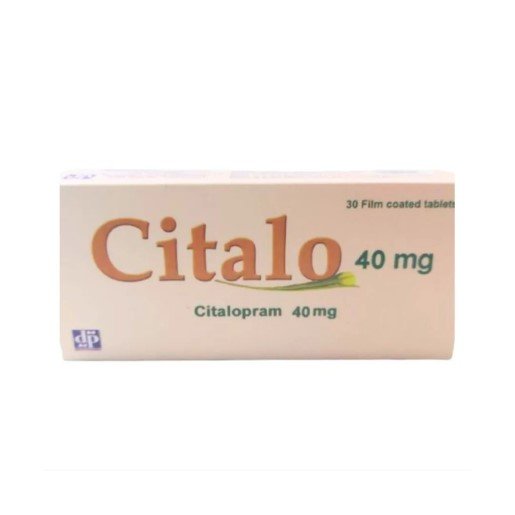
Citalo 40 mg 30 tablets

Available at Pharmaegy Pharmacy. Use as directed by your doctor.

Citalo 40 mg 30 film coated tablets Composition: Each film coated tablet contains Citalopram Hydrobromide 49,92 mg equivalent to 40mg Citalopram. Indications: Treating depression Treating panic disorder Description: Mechanism of action: Citalopram is a selective serotonin reuptake inhibitor (SSRI). SSRIs work by increasing the levels of serotonin in the brain. Serotonin is a neurotransmitter that plays a role in mood regulation. Dosage and Method of Administration: MAJOR DEPRESSIVE EPISODES Adults: Citalopram should be administered as a single oral dose of 20 mg daily. Dependent on individual patient response, the dose may be increased to a maximum of 40 mg daily. Citalopram should no longer be prescribed at doses greater than 40 mg per day. As with all antidepressant medicinal products, dosage should be reviewed and adjusted, if necessary, within 3 to 4 weeks of initiation of therapy and thereafter as judged clinically appropriate. Although there may be an increased potential for undesirable effects at higher doses, if after some weeks on the recommended dose insufficient response is seen, some patients may benefit from having their dose increased up to a maximum of 40 mg a day. Dosage adjustments should be made carefully on an individual patient basis, to maintain the patient at the lowest effective dose. Patients with depression should be treated for a sufficient period of at least 6 months to ensure that they are free from symptoms. PANIC DISORDER Adults: A single oral dose of 10 mg is recommended for the first week before increasing the dose to 20 mg daily. Dependent on individual patient response, the dose may be increased to a maximum of 40 mg daily. Patients with panic disorder should be treated for a sufficient period to ensure that they are free from symptoms. This period may be several months or even longer. Elderly patients (> 65 years of age) For elderly patients the dose should be decreased to half of the recommended dose, e,g, 10-20 mg daily. The recommended maximum dose for the elderly is 20 mg daily. Children and adolescents (< 18 years of age) Citalopram should not be used in the treatment of children and adolescents under the age of 18 years. Reduced hepatic function An initial dose of 10 mg daily for the first two weeks of treatment is recommended in patients with mild or moderate hepatic impairment. Depending on individual patient response, the dose may be increased to a maximum of 20 mg daily. Contraindications: -Hypersensitivity to the active substance or to any of the excipients listed in section. -Citalopram should not be given to patients receiving MAOis, including selegiline, in daily doses exceeding 10 mg/day. -Citalopram should not be given for fourteen days after discontinuation of an irreversible MAOI or for the time specified after discontinuation of a reversible MAOI (RIMA) as stated in the prescribing text of the RIMA. -Citalopram is contraindicated in combination with linezolid unless there are facilties or close observation and monitoring of blood pressure. -Citalopram is contraindicated in patients with known QT-interval prolongation or congenital long QT syndrome. -Citalopram is contraindicated together with medicinal products that are known to prolong the QT-interval. Special Warnings and Precautions: -SSRIs/SNRI may increase the risk of postpartum haemorrhage. -Suicide/suicidal thoughts or clinical worsening -Depression is associated with an increased risk of suicidal thoughts, self-harm and suicide (suicide-related events). This risk persists until significant remission occurs. As improvement may not occur during the first few weeks or more of treatment, patients should be closely monitored until such improvement occurs. It is general clinical experience that the risk of suicide may increase in the early stages of recovery. -The same precautions observed when treating patients with major depressive disorder should therefore be observed when treating patients with other psychiatric disorders. -Use in children and adolescents under 18 years of age Citalo should not be used in the treatment of children and adolescents under the age of 18 years. In addition, long-term safety data in children and adolescents concerning growth, maturation and cognitive and behavioural development are lacking. Elderly patients: Caution should be used in the treatment of elderly patients. Reduced kidney and liver function Caution should be used in the treatment of patients with reduced kidney and liver function. Paradoxical anxiety Some patients with panic disorder may experience intensified anxiety symptoms at the start of treatment with antidepressants. A low starting dose is advised to reduce the likelihood of a paradoxical anxiogenic effect. Mania In patients with manic-depressive illness a change towards the manic phase may occur. Should the patient enter a manic phase citalopram should be discontinued. -Citalopram should be avoided in patients with unstable epilepsy and patients with controlled epilepsy should be carefully monitored. -Citalopram should be discontinued if there is an increase in seizure frequency. -in patients with diabetes, treatment with an SSRI may alter glycaemic control. Insulin and/or oral hypoglycaemic dosage may need to be adjusted. -Angle-closure Glaucoma Citalopram should therefore be used with caution in patients with angle-closure glaucoma or history of glaucoma. -Serotonergic medicines Citalopram should not be used concomitantly with medicinal products with serotonergic effects such as sumatriptan or other triptans, tramadol, oxitriptan and tryptophan. -Haemorrhage There have been reports of prolonged bleeding time and /or bleeding abnormalities such as ecchymoses, gynecological hemorrhages, gastrointestinal bleeding and other cutaneous or mucous bleedings with SSRis. -St. John's wort Undesirable effects may be more common during concomitant use of citalopram and herbal preparations containing St John's wort (Hypericum perforatum). Therefore citalopram and St John's wort preparations should not be taken concomitantly. Pregnancy and Lactation: Pregnancy: Published data on pregnant women (more than 2500 exposed outcomes) indicate no malformative foeto / neonatal toxicity, however, citalopram should not be used during pregnancy unless clearly necessary and only after careful consideration of risk/benefit. Breast-feeding: Citalopram is excreted into breast milk. It is estimated that the suckling infant will receive about 5% of the weight related maternal daily dose (in mg/kg). No or only minor events have been observed in the infants. However, the existing information is insufficient for assessment of the risk to the child. Side Effect: Adverse effects observed with citalopram are in general mild and transient. They are most frequent during the first one or two weeks of treatment and usually attenuate subsequently. For the following reactions a dose-response was discovered: Sweating increased, dry mouth, insomnia, somnolence, diarrhea, nausea and fatigue. -Thrombocytopenia -Hypersensitivity, anaphylactic reaction -Inappropriate ADH secretion -Appetite decreased, weight decreased -Increased appetite, weight increased -Hyponatraemia -Hypokalemia -Sleep disorder -Agitation, libido decreased, anxiety, nervousness, confusional state, abnormal orgasm (female), abnormal dreams, apathy -Aggression, depersonalisation, hallucination, mania,libido increased -Panic attack, bruxism, restlessness, suicidal ideation, suicidal behaviour -Somnolence, insomnia, headache -Tremor, paraesthesia, dizziness, disturbance in attention, migraine, amnesia -Syncope -Convulsion grand mal, dyskinesia, taste disturbance -Convulsions, serotonin syndrome, extrapyramidal disorder, akathisia, movement disorder -Mydriasis (which may lead to acute narrow angle glaucoma), -Visual disturbance -Tinnitus -Palpitations -Bradycardia, tachycardia -QT-prolongation, ventricular arrhythmia including torsade de pointes -Haemorrhage -Orthostatic hypotension -Yawning, rhinitis -Coughing -Eplataxis -Dry mouth nausea -Diarrhea, vomiting, constipation, dyspepsia, abdominal pain, flatulence, salivary hypersecretion -Gastrointestinal hemorrhage (including rectal hemorrhage) -Hepatitis -Liver function test abnormal -Sweating Increased -Pruritus -Urticaria, alopecia, rash, purpura, photosensitivity reaction -Myalgia, arthralgia -Urinary retention -Impotence, ejaculation disorder, ejaculation failure -Female: Metrorrhagia -Male: Priapism -Galactorrhoea -Postpartum hemorrhage -Asthenia -Fatigue -Oedema -Pyrexia, malaise Storage: Store at a temperature not exceeding 30°C, in a dry place. Package: Carton box contains strips, 30 tablets per pack and an insert leaflet.

Citalo 40 mg 30 tablets


Description

Citalo 40 mg 30 film coated tablets Composition: Each film coated tablet contains Citalopram Hydrobromide 49,92 mg equivalent to 40mg Citalopram. Indications: Treating depression Treating panic disorder Description: Mechanism of action: Citalopram is a selective serotonin reuptake inhibitor (SSRI). SSRIs work by increasing the levels of serotonin in the brain. Serotonin is a neurotransmitter that plays a role in mood regulation. Dosage and Method of Administration: MAJOR DEPRESSIVE EPISODES Adults: Citalopram should be administered as a single oral dose of 20 mg daily. Dependent on individual patient response, the dose may be increased to a maximum of 40 mg daily. Citalopram should no longer be prescribed at doses greater than 40 mg per day. As with all antidepressant medicinal products, dosage should be reviewed and adjusted, if necessary, within 3 to 4 weeks of initiation of therapy and thereafter as judged clinically appropriate. Although there may be an increased potential for undesirable effects at higher doses, if after some weeks on the recommended dose insufficient response is seen, some patients may benefit from having their dose increased up to a maximum of 40 mg a day. Dosage adjustments should be made carefully on an individual patient basis, to maintain the patient at the lowest effective dose. Patients with depression should be treated for a sufficient period of at least 6 months to ensure that they are free from symptoms. PANIC DISORDER Adults: A single oral dose of 10 mg is recommended for the first week before increasing the dose to 20 mg daily. Dependent on individual patient response, the dose may be increased to a maximum of 40 mg daily. Patients with panic disorder should be treated for a sufficient period to ensure that they are free from symptoms. This period may be several months or even longer. Elderly patients (> 65 years of age) For elderly patients the dose should be decreased to half of the recommended dose, e,g, 10-20 mg daily. The recommended maximum dose for the elderly is 20 mg daily. Children and adolescents (< 18 years of age) Citalopram should not be used in the treatment of children and adolescents under the age of 18 years. Reduced hepatic function An initial dose of 10 mg daily for the first two weeks of treatment is recommended in patients with mild or moderate hepatic impairment. Depending on individual patient response, the dose may be increased to a maximum of 20 mg daily. Contraindications: -Hypersensitivity to the active substance or to any of the excipients listed in section. -Citalopram should not be given to patients receiving MAOis, including selegiline, in daily doses exceeding 10 mg/day. -Citalopram should not be given for fourteen days after discontinuation of an irreversible MAOI or for the time specified after discontinuation of a reversible MAOI (RIMA) as stated in the prescribing text of the RIMA. -Citalopram is contraindicated in combination with linezolid unless there are facilties or close observation and monitoring of blood pressure. -Citalopram is contraindicated in patients with known QT-interval prolongation or congenital long QT syndrome. -Citalopram is contraindicated together with medicinal products that are known to prolong the QT-interval. Special Warnings and Precautions: -SSRIs/SNRI may increase the risk of postpartum haemorrhage. -Suicide/suicidal thoughts or clinical worsening -Depression is associated with an increased risk of suicidal thoughts, self-harm and suicide (suicide-related events). This risk persists until significant remission occurs. As improvement may not occur during the first few weeks or more of treatment, patients should be closely monitored until such improvement occurs. It is general clinical experience that the risk of suicide may increase in the early stages of recovery. -The same precautions observed when treating patients with major depressive disorder should therefore be observed when treating patients with other psychiatric disorders. -Use in children and adolescents under 18 years of age Citalo should not be used in the treatment of children and adolescents under the age of 18 years. In addition, long-term safety data in children and adolescents concerning growth, maturation and cognitive and behavioural development are lacking. Elderly patients: Caution should be used in the treatment of elderly patients. Reduced kidney and liver function Caution should be used in the treatment of patients with reduced kidney and liver function. Paradoxical anxiety Some patients with panic disorder may experience intensified anxiety symptoms at the start of treatment with antidepressants. A low starting dose is advised to reduce the likelihood of a paradoxical anxiogenic effect. Mania In patients with manic-depressive illness a change towards the manic phase may occur. Should the patient enter a manic phase citalopram should be discontinued. -Citalopram should be avoided in patients with unstable epilepsy and patients with controlled epilepsy should be carefully monitored. -Citalopram should be discontinued if there is an increase in seizure frequency. -in patients with diabetes, treatment with an SSRI may alter glycaemic control. Insulin and/or oral hypoglycaemic dosage may need to be adjusted. -Angle-closure Glaucoma Citalopram should therefore be used with caution in patients with angle-closure glaucoma or history of glaucoma. -Serotonergic medicines Citalopram should not be used concomitantly with medicinal products with serotonergic effects such as sumatriptan or other triptans, tramadol, oxitriptan and tryptophan. -Haemorrhage There have been reports of prolonged bleeding time and /or bleeding abnormalities such as ecchymoses, gynecological hemorrhages, gastrointestinal bleeding and other cutaneous or mucous bleedings with SSRis. -St. John's wort Undesirable effects may be more common during concomitant use of citalopram and herbal preparations containing St John's wort (Hypericum perforatum). Therefore citalopram and St John's wort preparations should not be taken concomitantly. Pregnancy and Lactation: Pregnancy: Published data on pregnant women (more than 2500 exposed outcomes) indicate no malformative foeto / neonatal toxicity, however, citalopram should not be used during pregnancy unless clearly necessary and only after careful consideration of risk/benefit. Breast-feeding: Citalopram is excreted into breast milk. It is estimated that the suckling infant will receive about 5% of the weight related maternal daily dose (in mg/kg). No or only minor events have been observed in the infants. However, the existing information is insufficient for assessment of the risk to the child. Side Effect: Adverse effects observed with citalopram are in general mild and transient. They are most frequent during the first one or two weeks of treatment and usually attenuate subsequently. For the following reactions a dose-response was discovered: Sweating increased, dry mouth, insomnia, somnolence, diarrhea, nausea and fatigue. -Thrombocytopenia -Hypersensitivity, anaphylactic reaction -Inappropriate ADH secretion -Appetite decreased, weight decreased -Increased appetite, weight increased -Hyponatraemia -Hypokalemia -Sleep disorder -Agitation, libido decreased, anxiety, nervousness, confusional state, abnormal orgasm (female), abnormal dreams, apathy -Aggression, depersonalisation, hallucination, mania,libido increased -Panic attack, bruxism, restlessness, suicidal ideation, suicidal behaviour -Somnolence, insomnia, headache -Tremor, paraesthesia, dizziness, disturbance in attention, migraine, amnesia -Syncope -Convulsion grand mal, dyskinesia, taste disturbance -Convulsions, serotonin syndrome, extrapyramidal disorder, akathisia, movement disorder -Mydriasis (which may lead to acute narrow angle glaucoma), -Visual disturbance -Tinnitus -Palpitations -Bradycardia, tachycardia -QT-prolongation, ventricular arrhythmia including torsade de pointes -Haemorrhage -Orthostatic hypotension -Yawning, rhinitis -Coughing -Eplataxis -Dry mouth nausea -Diarrhea, vomiting, constipation, dyspepsia, abdominal pain, flatulence, salivary hypersecretion -Gastrointestinal hemorrhage (including rectal hemorrhage) -Hepatitis -Liver function test abnormal -Sweating Increased -Pruritus -Urticaria, alopecia, rash, purpura, photosensitivity reaction -Myalgia, arthralgia -Urinary retention -Impotence, ejaculation disorder, ejaculation failure -Female: Metrorrhagia -Male: Priapism -Galactorrhoea -Postpartum hemorrhage -Asthenia -Fatigue -Oedema -Pyrexia, malaise Storage: Store at a temperature not exceeding 30°C, in a dry place. Package: Carton box contains strips, 30 tablets per pack and an insert leaflet.

Highlights

  • .

  • .

Directions for use

Storage

Administration Instructions

Warning

Precaution

Citalo 40 mg 30 tablets

EGP 180.00 EGP 255.6 30% off

In stock
  • SKU
  • Pack Size
  • Unit Count
  • Country
  • Free Shipping
    For orders from $50
  • Support 24/7
    Call us any time
  • 100% Safety
    Only secure payments
  • Hot Offers
    Discounts up to 90%