

whatsapp-logo
User Image

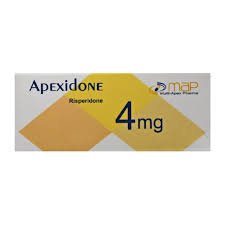
Apexidone 4 mg 30 tablets

Available at Pharmaegy Pharmacy. Use as directed by your doctor.

Apexidone 4 mg 30 tablets Composition: Risperidone — 4 mg in each tablet. Description: Apexidone 4 mg is a branded formulation whose active substance is risperidone, belonging to the class of atypical antipsychotics. It antagonizes dopamine (D₂) and serotonin (5‑HT₂) receptors, thereby modulating neurotransmitter activity in the brain. The drug exhibits antipsychotic, anxiolytic (calming), mood‑stabilizing, and aggression‑modulating effects. Indications for Use: Schizophrenia (in adults and adolescents) Bipolar disorder (including manic episodes) Behavioral disturbances in patients with dementia Autism — management of aggression, irritability, self‑injurious behavior (in pediatric practice) Psychotic states associated with agitation or hallucinations. Dosage and Administration: The dosage of Apexidone should be tailored to the individual patient and their clinical condition. Typical initial dosage for schizophrenia and bipolar disorder ranges from 2 mg to 4 mg per day. The dose may be gradually increased until the desired effect is achieved. The maximum recommended dose for schizophrenia and bipolar disorder is 16 mg per day. Contraindications: Hypersensitivity to risperidone or any of its excipients Concurrent use with paliperidone Severe hepatic or renal impairment Severe cardiac disorders (including arrhythmias) Psychosis associated with dementia in elderly patients History of neuroleptic malignant syndrome. Precautions: Monitor blood pressure and heart rate during treatment Use caution in patients with seizure disorders (e.g., epilepsy) In patients with hepatic, renal, or cardiac dysfunction, dose adjustments may be required In elderly patients, risk of thromboembolism may be elevated Thermoregulatory disturbances are possible May impair concentration and reaction time — avoid driving or operating machinery Do not consume alcohol concurrently Discontinue treatment gradually to avoid withdrawal symptoms. Adverse Effects: Nervous system: Somnolence, headache, dizziness, anxiety, insomnia, extrapyramidal symptoms (tremor, rigidity, hypersalivation), rarely seizures, very rarely neuroleptic malignant syndrome. Cardiovascular: Tachycardia, elevated blood pressure, QT prolongation, orthostatic hypotension. Gastrointestinal: Nausea, constipation, dry mouth, increased appetite, weight gain. Endocrine: Hyperprolactinemia, possible galactorrhea, amenorrhea, gynecomastia. Metabolic: Weight gain, disturbances in glucose metabolism. Allergic: Skin rash, pruritus, edema. In case of adverse reactions, consult your prescribing physician. In the event of serious reactions, discontinue use immediately and seek medical attention. Pregnancy and Lactation: Pregnancy: Use of risperidone during pregnancy should be restricted to cases where the expected benefit justifies potential risk to the fetus. Data suggest possible risk of extrapyramidal and withdrawal symptoms in newborns when antipsychotics are used in the third trimester. Lactation: Risperidone is excreted in breast milk. If treatment is required, breastfeeding should be discontinued. Storage: Store at a temperature not exceeding 25 °C, in a dry place, protected from light and out of the reach of children. Do not use after the expiration date indicated on the packaging. Dosage Form: Film‑coated tablets. Packaging: 30 tablets per pack.

Apexidone 4 mg 30 tablets


Description

Apexidone 4 mg 30 tablets Composition: Risperidone — 4 mg in each tablet. Description: Apexidone 4 mg is a branded formulation whose active substance is risperidone, belonging to the class of atypical antipsychotics. It antagonizes dopamine (D₂) and serotonin (5‑HT₂) receptors, thereby modulating neurotransmitter activity in the brain. The drug exhibits antipsychotic, anxiolytic (calming), mood‑stabilizing, and aggression‑modulating effects. Indications for Use: Schizophrenia (in adults and adolescents) Bipolar disorder (including manic episodes) Behavioral disturbances in patients with dementia Autism — management of aggression, irritability, self‑injurious behavior (in pediatric practice) Psychotic states associated with agitation or hallucinations. Dosage and Administration: The dosage of Apexidone should be tailored to the individual patient and their clinical condition. Typical initial dosage for schizophrenia and bipolar disorder ranges from 2 mg to 4 mg per day. The dose may be gradually increased until the desired effect is achieved. The maximum recommended dose for schizophrenia and bipolar disorder is 16 mg per day. Contraindications: Hypersensitivity to risperidone or any of its excipients Concurrent use with paliperidone Severe hepatic or renal impairment Severe cardiac disorders (including arrhythmias) Psychosis associated with dementia in elderly patients History of neuroleptic malignant syndrome. Precautions: Monitor blood pressure and heart rate during treatment Use caution in patients with seizure disorders (e.g., epilepsy) In patients with hepatic, renal, or cardiac dysfunction, dose adjustments may be required In elderly patients, risk of thromboembolism may be elevated Thermoregulatory disturbances are possible May impair concentration and reaction time — avoid driving or operating machinery Do not consume alcohol concurrently Discontinue treatment gradually to avoid withdrawal symptoms. Adverse Effects: Nervous system: Somnolence, headache, dizziness, anxiety, insomnia, extrapyramidal symptoms (tremor, rigidity, hypersalivation), rarely seizures, very rarely neuroleptic malignant syndrome. Cardiovascular: Tachycardia, elevated blood pressure, QT prolongation, orthostatic hypotension. Gastrointestinal: Nausea, constipation, dry mouth, increased appetite, weight gain. Endocrine: Hyperprolactinemia, possible galactorrhea, amenorrhea, gynecomastia. Metabolic: Weight gain, disturbances in glucose metabolism. Allergic: Skin rash, pruritus, edema. In case of adverse reactions, consult your prescribing physician. In the event of serious reactions, discontinue use immediately and seek medical attention. Pregnancy and Lactation: Pregnancy: Use of risperidone during pregnancy should be restricted to cases where the expected benefit justifies potential risk to the fetus. Data suggest possible risk of extrapyramidal and withdrawal symptoms in newborns when antipsychotics are used in the third trimester. Lactation: Risperidone is excreted in breast milk. If treatment is required, breastfeeding should be discontinued. Storage: Store at a temperature not exceeding 25 °C, in a dry place, protected from light and out of the reach of children. Do not use after the expiration date indicated on the packaging. Dosage Form: Film‑coated tablets. Packaging: 30 tablets per pack.

Highlights

  • .

  • .

Directions for use

Storage

Administration Instructions

Warning

Precaution

Apexidone 4 mg 30 tablets

EGP 126.00 EGP 147.42 15% off

In stock
  • SKU
  • Pack Size
  • Unit Count
  • Country
  • Free Shipping
    For orders from $50
  • Support 24/7
    Call us any time
  • 100% Safety
    Only secure payments
  • Hot Offers
    Discounts up to 90%