

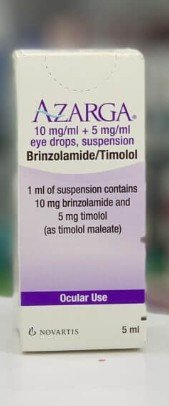
Azarga Eye drops, 5 ml
Available at Pharmaegy Pharmacy. Use as directed by your doctor.
Trade Name: AZARGA 10 mg/ml + 5 mg/ml Eye drops, suspension 5 ml Composition: One ml of suspension contains: Brinzolamide 10 mg Timolol maleate 5 mg Inactive ingredients: benzalkonium chloride, carbopol 974P, disodium edetate, mannitol (E421), purified water, sodium chloride, tyloxapol, hydrochloric acid and/or sodium hydroxide. Properties: AZARGA contains two active substances, brinzolamide and timolol, which work together to reduce pressure within the eye. AZARGA is used to treat high pressure in the eyes, also called glaucoma or ocular hypertension, in adult patients that are more than 18 years of age and in whom high pressure in the eyes cannot be controlled effectively by one medicine alone. Indications: Decrease of intraocular pressure (IOP) in adult patients with open-angle glaucoma or ocular hypertension for whom monotherapy provides insufficient IOP reduction. Directions for use: Always use this medicine exactly as your doctor or pharmacist has told you. To prevent contamination of the dropper tip and the suspension, care must be taken not to touch the eyelids, surrounding areas or other surfaces with the dropper tip. Keep the bottle tightly closed helps. Do not touch your eye or eyelid, surrounding areas or other surfaces with the dropper. It could infect the drops. Gently press on the base of the bottle to release one drop of AZARGA at a time. After using AZARGA, press a finger into the corner of your eye, by the nose for 2 minutes. This helps to stop AZARGA getting into the rest of the body. Close the bottle cap firmly immediately after use. If you are using other eye drop or eye ointment medicines leave at least 5 minutes between each medicine. Eye ointments should be administered last. If you use more AZARGA than you should, rinse your eye with warm water. Do not put in any more drops until it is time for your next regular dose. Side effects: -You may experience decreased heart rate, decreased blood pressure, heart failure, difficulty breathing and your nervous system may be affected. -skin rash, severe skin reaction, or severe redness; -eye surface inflammation, blurred vision, signs and symptoms of eye irritation (e.g. burning, stinging, itching, tearing, redness), eye pain; -taste disturbances. Uncommon: corneal erosion, eye surface inflammation with surface damage, inflammation inside the eye, corneal staining, abnormal sensation in the eyes, eye discharge, dry eye, tired eyes, itchy eye, eye redness, eyelid redness. General : decrease in white blood cell count, decreased blood pressure, cough, blood in urine, body weakness, difficulty sleeping (insomnia), throat pain, running nose. Others: hallucinations, depression, nightmares, memory loss, headache, nervousness, irritability, tiredness, shaking, feeling abnormal, fainting, dizziness, drowsiness, generalized or severe weakness, unusual sensations, nausea, vomiting, diarrhea, intestinal gas or abdominal discomfort, inflammation of the throat, dry or abnormal sensation in mouth, indigestion, stomach ache, abnormal liver function values, increased blood chlorine levels, or decreased red blood cell count as seen in a blood test, increased allergic symptoms, generalized allergic reactions including swelling beneath the skin that can occur in areas such as the face and limbs and can obstruct the airway which may cause difficulty swallowing or breathing, hives, localized and generalized rash, itchiness, ringing in the ears, sensation of spinning or dizziness, generalized back, joint, or muscle pain not caused by exercise, muscle spasms, pain in extremities, muscle weakness/tiredness, increases in the signs and symptoms of myasthenia gravis, kidney pain such as lower back pain, frequent urination, sexual dysfunction, decreased libido, male sexual difficulty, low blood sugar levels. Contraindications: -Allergy to brinzolamide, medicines called sulphonamides (examples include medicines used to treat diabetes, infections and also diuretics (water tablets), timolol, beta- blockers or any of the other ingredients of this medicine; -If you have now or have had in the past respiratory problems such as asthma, severe long lasting obstructive bronchitis or other types of breathing problems; -If you have severe hay fever; -If you have a slow heartbeat, heart failure or disorders of heart rhythm; -If you have too much acidity in your blood (a condition called hyperchloremic acidosis); -If you have severe kidney problems; -Not recommended for patients under 18 years of age. Warnings and precautions Only use AZARGA for dropping in your eye(s). If signs of serious reactions or hypersensitivity occur, discontinue the use of this product and talk to your doctor. Talk to your doctor or pharmacist before using AZARGA if you have or have had in the past: -coronary heart disease -heart failure, low blood pressure -disturbances of heart rate such as slow heartbeat, breathing problems, -asthma or chronic obstructive pulmonary disease poor blood circulation disease (such as Raynaud’s disease or Raynaud’s syndrome), -diabetes as timolol may mask signs and symptoms of low blood sugar, -overactivity of the thyroid gland as timolol may mask signs and symptoms of thyroid disease -muscular weakness (myasthenia gravis) Tell your doctor before you have an operation that you are using AZARGA as timolol may change effects of some medicines used during anesthesia. -If you have a history of atopy (a tendency to develop an allergic reaction) and severe allergic reactions you may be more sensitive to developing an allergic reaction whilst using AZARGA and adrenaline may not be as effective to treat an allergic reaction; -if you have liver problems; -If you have dry eyes or cornea problems; -If you have problems with your kidneys. Tell your doctor or pharmacist if you are using, have recently used or might use any other medicines. AZARGA can affect, or be affected by, other medicines you are taking, including other eye drops for the treatment of glaucoma. Tell your doctor if you are taking or intent to take medicines to lower blood pressure like parasympathomimetics and guanethidine, or other heart medicines including quinidine, amiodarone or other medicines to treat heart rhythm disorders and glycosides to treat heart insufficiency. Also tell your doctor if you are taking or intend to take medicines to treat diabetes, or to treat gastric ulcers, antifungal, antiviral or antibiotic medicines, or antidepressants such as fluoxetine and paroxetine. If you are taking another carbonic anhydrase inhibitor (acetazolamide or dorzolamide), talk to your doctor. Increase in pupil size when taking Azarga and adrenaline (epinephrine) together has been reported occasionally. You should not use AZARGA if you are pregnant or might get pregnant, unless your doctor considers it necessary. Do not use AZARGA if you are breastfeeding, timolol may get into your milk. Ask your doctor for advice before taking any medicine during breastfeeding. Do not drive or use machines until your vision is clear. You may find that your vision is blurred for some time just after using AZARGA. You should remove contact lenses before using this medicine and put them back 15 minutes afterwards. Benzalkonium chloride may also cause eye irritation, especially if you have dry eyes or disorders of the cornea. If you feel abnormal eye sensation, stinging or pain in the eye after using this medicine, talk to your doctor. Storage: Keep this medicine out of the sight and reach of children. This medicine does not require any special storage conditions. Throw away the bottle 4 weeks after first opening to prevent infections, and use a new bottle. Package: Carton box holds a 5 ml dropper bottle and paper instructions.

Azarga Eye drops, 5 ml
Description
Trade Name: AZARGA 10 mg/ml + 5 mg/ml Eye drops, suspension 5 ml Composition: One ml of suspension contains: Brinzolamide 10 mg Timolol maleate 5 mg Inactive ingredients: benzalkonium chloride, carbopol 974P, disodium edetate, mannitol (E421), purified water, sodium chloride, tyloxapol, hydrochloric acid and/or sodium hydroxide. Properties: AZARGA contains two active substances, brinzolamide and timolol, which work together to reduce pressure within the eye. AZARGA is used to treat high pressure in the eyes, also called glaucoma or ocular hypertension, in adult patients that are more than 18 years of age and in whom high pressure in the eyes cannot be controlled effectively by one medicine alone. Indications: Decrease of intraocular pressure (IOP) in adult patients with open-angle glaucoma or ocular hypertension for whom monotherapy provides insufficient IOP reduction. Directions for use: Always use this medicine exactly as your doctor or pharmacist has told you. To prevent contamination of the dropper tip and the suspension, care must be taken not to touch the eyelids, surrounding areas or other surfaces with the dropper tip. Keep the bottle tightly closed helps. Do not touch your eye or eyelid, surrounding areas or other surfaces with the dropper. It could infect the drops. Gently press on the base of the bottle to release one drop of AZARGA at a time. After using AZARGA, press a finger into the corner of your eye, by the nose for 2 minutes. This helps to stop AZARGA getting into the rest of the body. Close the bottle cap firmly immediately after use. If you are using other eye drop or eye ointment medicines leave at least 5 minutes between each medicine. Eye ointments should be administered last. If you use more AZARGA than you should, rinse your eye with warm water. Do not put in any more drops until it is time for your next regular dose. Side effects: -You may experience decreased heart rate, decreased blood pressure, heart failure, difficulty breathing and your nervous system may be affected. -skin rash, severe skin reaction, or severe redness; -eye surface inflammation, blurred vision, signs and symptoms of eye irritation (e.g. burning, stinging, itching, tearing, redness), eye pain; -taste disturbances. Uncommon: corneal erosion, eye surface inflammation with surface damage, inflammation inside the eye, corneal staining, abnormal sensation in the eyes, eye discharge, dry eye, tired eyes, itchy eye, eye redness, eyelid redness. General : decrease in white blood cell count, decreased blood pressure, cough, blood in urine, body weakness, difficulty sleeping (insomnia), throat pain, running nose. Others: hallucinations, depression, nightmares, memory loss, headache, nervousness, irritability, tiredness, shaking, feeling abnormal, fainting, dizziness, drowsiness, generalized or severe weakness, unusual sensations, nausea, vomiting, diarrhea, intestinal gas or abdominal discomfort, inflammation of the throat, dry or abnormal sensation in mouth, indigestion, stomach ache, abnormal liver function values, increased blood chlorine levels, or decreased red blood cell count as seen in a blood test, increased allergic symptoms, generalized allergic reactions including swelling beneath the skin that can occur in areas such as the face and limbs and can obstruct the airway which may cause difficulty swallowing or breathing, hives, localized and generalized rash, itchiness, ringing in the ears, sensation of spinning or dizziness, generalized back, joint, or muscle pain not caused by exercise, muscle spasms, pain in extremities, muscle weakness/tiredness, increases in the signs and symptoms of myasthenia gravis, kidney pain such as lower back pain, frequent urination, sexual dysfunction, decreased libido, male sexual difficulty, low blood sugar levels. Contraindications: -Allergy to brinzolamide, medicines called sulphonamides (examples include medicines used to treat diabetes, infections and also diuretics (water tablets), timolol, beta- blockers or any of the other ingredients of this medicine; -If you have now or have had in the past respiratory problems such as asthma, severe long lasting obstructive bronchitis or other types of breathing problems; -If you have severe hay fever; -If you have a slow heartbeat, heart failure or disorders of heart rhythm; -If you have too much acidity in your blood (a condition called hyperchloremic acidosis); -If you have severe kidney problems; -Not recommended for patients under 18 years of age. Warnings and precautions Only use AZARGA for dropping in your eye(s). If signs of serious reactions or hypersensitivity occur, discontinue the use of this product and talk to your doctor. Talk to your doctor or pharmacist before using AZARGA if you have or have had in the past: -coronary heart disease -heart failure, low blood pressure -disturbances of heart rate such as slow heartbeat, breathing problems, -asthma or chronic obstructive pulmonary disease poor blood circulation disease (such as Raynaud’s disease or Raynaud’s syndrome), -diabetes as timolol may mask signs and symptoms of low blood sugar, -overactivity of the thyroid gland as timolol may mask signs and symptoms of thyroid disease -muscular weakness (myasthenia gravis) Tell your doctor before you have an operation that you are using AZARGA as timolol may change effects of some medicines used during anesthesia. -If you have a history of atopy (a tendency to develop an allergic reaction) and severe allergic reactions you may be more sensitive to developing an allergic reaction whilst using AZARGA and adrenaline may not be as effective to treat an allergic reaction; -if you have liver problems; -If you have dry eyes or cornea problems; -If you have problems with your kidneys. Tell your doctor or pharmacist if you are using, have recently used or might use any other medicines. AZARGA can affect, or be affected by, other medicines you are taking, including other eye drops for the treatment of glaucoma. Tell your doctor if you are taking or intent to take medicines to lower blood pressure like parasympathomimetics and guanethidine, or other heart medicines including quinidine, amiodarone or other medicines to treat heart rhythm disorders and glycosides to treat heart insufficiency. Also tell your doctor if you are taking or intend to take medicines to treat diabetes, or to treat gastric ulcers, antifungal, antiviral or antibiotic medicines, or antidepressants such as fluoxetine and paroxetine. If you are taking another carbonic anhydrase inhibitor (acetazolamide or dorzolamide), talk to your doctor. Increase in pupil size when taking Azarga and adrenaline (epinephrine) together has been reported occasionally. You should not use AZARGA if you are pregnant or might get pregnant, unless your doctor considers it necessary. Do not use AZARGA if you are breastfeeding, timolol may get into your milk. Ask your doctor for advice before taking any medicine during breastfeeding. Do not drive or use machines until your vision is clear. You may find that your vision is blurred for some time just after using AZARGA. You should remove contact lenses before using this medicine and put them back 15 minutes afterwards. Benzalkonium chloride may also cause eye irritation, especially if you have dry eyes or disorders of the cornea. If you feel abnormal eye sensation, stinging or pain in the eye after using this medicine, talk to your doctor. Storage: Keep this medicine out of the sight and reach of children. This medicine does not require any special storage conditions. Throw away the bottle 4 weeks after first opening to prevent infections, and use a new bottle. Package: Carton box holds a 5 ml dropper bottle and paper instructions.
Highlights
-
.
-
.
-
-
Directions for use
Storage
Administration Instructions
Warning
Precaution
Azarga Eye drops, 5 ml
-
Free Shipping
For orders from $50 -
Support 24/7
Call us any time -
100% Safety
Only secure payments -
Hot Offers
Discounts up to 90%