

whatsapp-logo
User Image

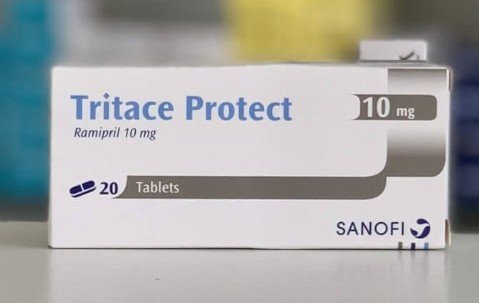
Tritace® Protect 10 mg, 20 tablets

Available at Pharmaegy Pharmacy. Use as directed by your doctor.

Trade Name: Tritace®Protect Ramipril 10 mg 20 tablets Composition: Ramipril 10 mg Inactive ingredients: Hypromellose, Pregelatinized maize starch, Microcrystalline cellulose, Sodium stearyl fumarate Properties: Tritace® contains a medicine called ramipril. This belongs to a group of medicines called ACE inhibitors(Angiotensin Converting Enzyme Inhibitors). Ramipril works by: -Decreasing your body’s production of substances that could raise your blood pressure; -Making your blood vessels relax and widen; -Making it easier for your heart to pump blood around your body. Indications: -Treatment of high blood pressure (hypertension) -To reduce the risk of you having a heart attack or stroke -To reduce the risk or delay the worsening of kidney problems (whether or not you have diabetes) -To treat your heart when it cannot pump enough blood to the rest of your body (heart failure) -As treatment following a heart attack (myocardial infarction) complicated with heart failure. Dosage and administration: Always take this medicine exactly as your doctor has told you. Treatment of high blood pressure: -The usual starting dose is 1.25 mg or 2.5 mg once daily. -Your doctor will adjust the amount you take until your blood pressure is controlled. -The maximum dose is 10 mg once daily. To reduce the risk of you having a heart attack or stroke: -The usual starting dose is 2.5 mg once daily. -Your doctor may then decide to increase the amount you take. -The usual dose is 10 mg once daily. Treatment to reduce or delay the worsening of kidney problems -You may be started on a dose of 1.25 mg or 2.5 mg once daily. -Your doctor will adjust the amount you are taking. -The usual dose is 5 mg or 10 mg once daily. Treatment of heart failure -The usual starting dose is 1.25 mg once daily. -Your doctor will adjust the amount you take. -The maximum dose is 10 mg daily. Two administrations per day are preferable. Treatment after you have had a heart attack -The usual starting dose is 1.25 mg once daily to 2.5 mg twice daily. -Your doctor will adjust the amount you take. -The usual dose is 10 mg daily. Two administrations per day are preferable. Elderly: -Your doctor will reduce the initial dose and adjust your treatment more slowly. -Take this medicine by mouth at the same time of the day each day. Swallow the tablets whole with liquid. Do not crush or chew the tablets. If you take more Tritace® than you should tell a doctor or go to the nearest hospital casualty department straight away. Do not drive to the hospital, get somebody else to take you or call for an ambulance. Take the medicine pack with you. This is so the doctor knows what you have taken. If you forget to take Tritace® If you miss a dose, take your normal dose when it is next due. Do not take a double dose to make up for a forgotten tablet. Side effects: Stop taking Tritace® and see a doctor straight away, if you notice any of the following serious side effects: -Swelling of the face, lips or throat which make it difficult to swallow or breathe, as well as itching and rashes. This could be a sign of a severe allergic reaction. -Severe skin reactions including rash, ulcers in your mouth, worsening of a pre-existing skin disease, reddening, blistering or detachment of skin (such as Stevens-Johnson syndrome, toxic epidermal necrolysis or erythema multiforme). Tell your doctor immediately if you experience: Faster heart rate, uneven or forceful heartbeat (palpitations), chest pain, tightness in your chest or more serious problems including heart attack and stroke, shortness of breath or a cough, Bruising more easily, bleeding for longer than normal, any sign of bleeding (e.g. bleeding from the gums), purple spots blotching on the skin or getting infections more easily than usual, sore throat and fever, feeling tired, faint, dizzy or having pale skin, severe stomach pain, fever, chills, tiredness, loss of appetite, stomach pain, feeling sick, yellowing of your skin or eyes (jaundice). -Common: Headache or feeling tired, Feeling dizzy. Fainting, hypotension (abnormally low blood pressure), especially when you stand or sit up quickly, dry tickly cough, inflammation of your sinuses (sinusitis) or bronchitis, shortness of breath, stomach or gut pain, diarrhea, indigestion, feeling or being sick, skin rash with or without raised area, chest pain, cramps or pain in your muscles, blood tests showing more potassium than usual in your blood. -Uncommon: Balance problems (vertigo), Itching and unusual skin sensations such as numbness, tingling, pricking, burning or creeping on your skin (paraesthesia), Loss or change in the way things taste, Sleep problems, Feeling depressed, anxious, more nervous than usual or restless, Blocked nose, difficulty breathing or worsening of asthma, A swelling in your gut called “intestinal angioedema” presenting with symptoms like abdominal pain, vomiting and diarrhea, Heartburn, constipation or dry mouth, Passing more water (urine) than usual over the day, Sweating more than usual, Loss or decrease of appetite (anorexia), Increased or irregular heartbeats, Swollen arms and legs, Flushing, Blurred vision, Pain in your joints, Fever, Sexual inability in men, reduced sexual desire in men or women, An increased number of certain white blood cells (eosinophilia) found during a blood test, Blood tests showing changes in the way your liver, pancreas or kidneys are working. -Rare: Feeling shaky or confused Red and swollen tongue Severe flaking or peeling of the skin, itchy, lumpy rash Nail problems Skin rash or bruising Blotches on your skin and cold extremities Red, itchy, swollen or watery eyes Disturbed hearing and ringing in your ears Feeling weak Blood tests showing a decrease in the number of red blood cells, white blood cells or platelets or in the amount of hemoglobin. Very rare: Being more sensitive to the sun than usual. Contraindications: -If you are allergic to ramipril, any other ACE inhibitor medicine or any of the ingredients of this medicine; -If you have taken or are currently taking sacubitril/ valsartan, a medicine used to treat a type of long-term (chronic) heart failure in adults; -If you have kidney problems where the blood supply to your kidney is reduced (renal artery stenosis); -During the last 6 months of pregnancy; -If your blood pressure is abnormally low or unstable; -If you have diabetes or impaired kidney function, you are treated with a blood pressure lowering medicine containing aliskiren. Warnings and precautions: Talk to your doctor or pharmacist before taking Tritace®: -If you have heart, liver or kidney problems; -If you have lost a lot of body salts or fluids (through being sick (vomiting), having diarrhea, sweating more than usual, being on a low salt diet, taking diuretics (water tablets) for a long time or having had dialysis); -If you are going to have treatment to reduce your allergy to bee or wasp stings (desensitization); -If you are going to receive an anesthetic. -If you have high amounts of potassium in your blood (shown in blood test results) -You are taking medicines or have conditions which may decrease sodium levels in your blood. Your doctor may carry out regular blood tests, particularly for checking the levels of sodium in your blood especially if you are elderly.; -If you are taking medicines that may increase the risk of angioedema, a serious allergic reaction, such as temsirolimus, everolimus, sirolimus, vildagliptin, neprilysin (NEP) inhibitors (such as racecadotril) or sacubitril/valsartan.; -If you have collagen vascular disease such as scleroderma or systemic lupus erythematosus; -If you think that you are (or might become) pregnant. -If you are taking any of the following medicines used to treat high blood pressure: an angiotensin Il receptor blocker (ARBs) (also known as sartans-for example valsartan, telmisartan, irbesartan), in particular if you have diabetes-related kidney problems. Children and adolescents: Tritace® is not recommended for use in children and adolescents below 18 years of age because the safety and efficacy of Tritace® in children has not yet been established. Other medicines and Tritace®: Tell your doctor or pharmacist if you are taking, have recently taken or might take any other medicines. They can make Tritace® not effective: -Medicines used to relieve pain and inflammation; -Medicines used for the treatment of low blood pressure, shock, cardiac failure, asthma or allergies such as ephedrine, noradrenaline or adrenaline. Tell your doctor if you are taking any of the following medicines. They can increase the chance of getting side effects: -Sacubitril/valsartan; -Medicines used to relieve pain and inflammation; -Medicines for cancer (chemotherapy); -Medicines to stop the rejection of organs after a transplant such as cyclosporine; -Diuretics such as furosemide; -Medicines which can increase the amount of potassium in your blood such as spironolactone, triamterene, amiloride, potassium salts, trimethoprim alone or in combination with sulfamethoxazole (for infections) and heparin (for thinning blood); -Steroid medicines for inflammation such as prednisolone; -Allopurinol (used to lower the uric acid in your blood); -Procainamide (for heart rhythm problems); -Temsirolimus (for cancer); -Sirolimus, everolimus (for prevention of graft rejection); -Vildagliptin; -Racecadotril; Tell your doctor if you are taking any of the following medicines. They may be affected by Tritace®: -Medicines for diabetes such as oral glucose lowering medicines and insulin; -Lithium. Drinking alcohol with Tritace® may make you feel dizzy or light-headed. Tritace® may be taken with or without food. Pregnancy: You must tell your doctor if you think that you are (or might become) pregnant. You should not take Tritace® in the first 12 weeks of pregnancy and you must not take them at all from the 13th week as their use during pregnancy may possibly be harmful to the baby. If you become pregnant, tell your doctor immediately. A switch to a suitable alternative treatment should be carried out in advance of a planned pregnancy. Breast-feeding You should not take Tritace® if you are breast-feeding. Driving and using machines: You may feel dizzy, while taking Tritace®. This is more likely to happen when you start taking Tritace® or start taking a higher dose. If this happens, do not drive or use any tools or machines. Keep this medicine out of the sight and reach of children. Do not throw away any medicines via wastewater or household waste. Storage: Store at a temperature not exceeding 30°C Package: Carton box holds 2 strips each of 10 tablets, and an insert leaflet

Tritace® Protect 10 mg, 20 tablets


Description

Trade Name: Tritace®Protect Ramipril 10 mg 20 tablets Composition: Ramipril 10 mg Inactive ingredients: Hypromellose, Pregelatinized maize starch, Microcrystalline cellulose, Sodium stearyl fumarate Properties: Tritace® contains a medicine called ramipril. This belongs to a group of medicines called ACE inhibitors(Angiotensin Converting Enzyme Inhibitors). Ramipril works by: -Decreasing your body’s production of substances that could raise your blood pressure; -Making your blood vessels relax and widen; -Making it easier for your heart to pump blood around your body. Indications: -Treatment of high blood pressure (hypertension) -To reduce the risk of you having a heart attack or stroke -To reduce the risk or delay the worsening of kidney problems (whether or not you have diabetes) -To treat your heart when it cannot pump enough blood to the rest of your body (heart failure) -As treatment following a heart attack (myocardial infarction) complicated with heart failure. Dosage and administration: Always take this medicine exactly as your doctor has told you. Treatment of high blood pressure: -The usual starting dose is 1.25 mg or 2.5 mg once daily. -Your doctor will adjust the amount you take until your blood pressure is controlled. -The maximum dose is 10 mg once daily. To reduce the risk of you having a heart attack or stroke: -The usual starting dose is 2.5 mg once daily. -Your doctor may then decide to increase the amount you take. -The usual dose is 10 mg once daily. Treatment to reduce or delay the worsening of kidney problems -You may be started on a dose of 1.25 mg or 2.5 mg once daily. -Your doctor will adjust the amount you are taking. -The usual dose is 5 mg or 10 mg once daily. Treatment of heart failure -The usual starting dose is 1.25 mg once daily. -Your doctor will adjust the amount you take. -The maximum dose is 10 mg daily. Two administrations per day are preferable. Treatment after you have had a heart attack -The usual starting dose is 1.25 mg once daily to 2.5 mg twice daily. -Your doctor will adjust the amount you take. -The usual dose is 10 mg daily. Two administrations per day are preferable. Elderly: -Your doctor will reduce the initial dose and adjust your treatment more slowly. -Take this medicine by mouth at the same time of the day each day. Swallow the tablets whole with liquid. Do not crush or chew the tablets. If you take more Tritace® than you should tell a doctor or go to the nearest hospital casualty department straight away. Do not drive to the hospital, get somebody else to take you or call for an ambulance. Take the medicine pack with you. This is so the doctor knows what you have taken. If you forget to take Tritace® If you miss a dose, take your normal dose when it is next due. Do not take a double dose to make up for a forgotten tablet. Side effects: Stop taking Tritace® and see a doctor straight away, if you notice any of the following serious side effects: -Swelling of the face, lips or throat which make it difficult to swallow or breathe, as well as itching and rashes. This could be a sign of a severe allergic reaction. -Severe skin reactions including rash, ulcers in your mouth, worsening of a pre-existing skin disease, reddening, blistering or detachment of skin (such as Stevens-Johnson syndrome, toxic epidermal necrolysis or erythema multiforme). Tell your doctor immediately if you experience: Faster heart rate, uneven or forceful heartbeat (palpitations), chest pain, tightness in your chest or more serious problems including heart attack and stroke, shortness of breath or a cough, Bruising more easily, bleeding for longer than normal, any sign of bleeding (e.g. bleeding from the gums), purple spots blotching on the skin or getting infections more easily than usual, sore throat and fever, feeling tired, faint, dizzy or having pale skin, severe stomach pain, fever, chills, tiredness, loss of appetite, stomach pain, feeling sick, yellowing of your skin or eyes (jaundice). -Common: Headache or feeling tired, Feeling dizzy. Fainting, hypotension (abnormally low blood pressure), especially when you stand or sit up quickly, dry tickly cough, inflammation of your sinuses (sinusitis) or bronchitis, shortness of breath, stomach or gut pain, diarrhea, indigestion, feeling or being sick, skin rash with or without raised area, chest pain, cramps or pain in your muscles, blood tests showing more potassium than usual in your blood. -Uncommon: Balance problems (vertigo), Itching and unusual skin sensations such as numbness, tingling, pricking, burning or creeping on your skin (paraesthesia), Loss or change in the way things taste, Sleep problems, Feeling depressed, anxious, more nervous than usual or restless, Blocked nose, difficulty breathing or worsening of asthma, A swelling in your gut called “intestinal angioedema” presenting with symptoms like abdominal pain, vomiting and diarrhea, Heartburn, constipation or dry mouth, Passing more water (urine) than usual over the day, Sweating more than usual, Loss or decrease of appetite (anorexia), Increased or irregular heartbeats, Swollen arms and legs, Flushing, Blurred vision, Pain in your joints, Fever, Sexual inability in men, reduced sexual desire in men or women, An increased number of certain white blood cells (eosinophilia) found during a blood test, Blood tests showing changes in the way your liver, pancreas or kidneys are working. -Rare: Feeling shaky or confused Red and swollen tongue Severe flaking or peeling of the skin, itchy, lumpy rash Nail problems Skin rash or bruising Blotches on your skin and cold extremities Red, itchy, swollen or watery eyes Disturbed hearing and ringing in your ears Feeling weak Blood tests showing a decrease in the number of red blood cells, white blood cells or platelets or in the amount of hemoglobin. Very rare: Being more sensitive to the sun than usual. Contraindications: -If you are allergic to ramipril, any other ACE inhibitor medicine or any of the ingredients of this medicine; -If you have taken or are currently taking sacubitril/ valsartan, a medicine used to treat a type of long-term (chronic) heart failure in adults; -If you have kidney problems where the blood supply to your kidney is reduced (renal artery stenosis); -During the last 6 months of pregnancy; -If your blood pressure is abnormally low or unstable; -If you have diabetes or impaired kidney function, you are treated with a blood pressure lowering medicine containing aliskiren. Warnings and precautions: Talk to your doctor or pharmacist before taking Tritace®: -If you have heart, liver or kidney problems; -If you have lost a lot of body salts or fluids (through being sick (vomiting), having diarrhea, sweating more than usual, being on a low salt diet, taking diuretics (water tablets) for a long time or having had dialysis); -If you are going to have treatment to reduce your allergy to bee or wasp stings (desensitization); -If you are going to receive an anesthetic. -If you have high amounts of potassium in your blood (shown in blood test results) -You are taking medicines or have conditions which may decrease sodium levels in your blood. Your doctor may carry out regular blood tests, particularly for checking the levels of sodium in your blood especially if you are elderly.; -If you are taking medicines that may increase the risk of angioedema, a serious allergic reaction, such as temsirolimus, everolimus, sirolimus, vildagliptin, neprilysin (NEP) inhibitors (such as racecadotril) or sacubitril/valsartan.; -If you have collagen vascular disease such as scleroderma or systemic lupus erythematosus; -If you think that you are (or might become) pregnant. -If you are taking any of the following medicines used to treat high blood pressure: an angiotensin Il receptor blocker (ARBs) (also known as sartans-for example valsartan, telmisartan, irbesartan), in particular if you have diabetes-related kidney problems. Children and adolescents: Tritace® is not recommended for use in children and adolescents below 18 years of age because the safety and efficacy of Tritace® in children has not yet been established. Other medicines and Tritace®: Tell your doctor or pharmacist if you are taking, have recently taken or might take any other medicines. They can make Tritace® not effective: -Medicines used to relieve pain and inflammation; -Medicines used for the treatment of low blood pressure, shock, cardiac failure, asthma or allergies such as ephedrine, noradrenaline or adrenaline. Tell your doctor if you are taking any of the following medicines. They can increase the chance of getting side effects: -Sacubitril/valsartan; -Medicines used to relieve pain and inflammation; -Medicines for cancer (chemotherapy); -Medicines to stop the rejection of organs after a transplant such as cyclosporine; -Diuretics such as furosemide; -Medicines which can increase the amount of potassium in your blood such as spironolactone, triamterene, amiloride, potassium salts, trimethoprim alone or in combination with sulfamethoxazole (for infections) and heparin (for thinning blood); -Steroid medicines for inflammation such as prednisolone; -Allopurinol (used to lower the uric acid in your blood); -Procainamide (for heart rhythm problems); -Temsirolimus (for cancer); -Sirolimus, everolimus (for prevention of graft rejection); -Vildagliptin; -Racecadotril; Tell your doctor if you are taking any of the following medicines. They may be affected by Tritace®: -Medicines for diabetes such as oral glucose lowering medicines and insulin; -Lithium. Drinking alcohol with Tritace® may make you feel dizzy or light-headed. Tritace® may be taken with or without food. Pregnancy: You must tell your doctor if you think that you are (or might become) pregnant. You should not take Tritace® in the first 12 weeks of pregnancy and you must not take them at all from the 13th week as their use during pregnancy may possibly be harmful to the baby. If you become pregnant, tell your doctor immediately. A switch to a suitable alternative treatment should be carried out in advance of a planned pregnancy. Breast-feeding You should not take Tritace® if you are breast-feeding. Driving and using machines: You may feel dizzy, while taking Tritace®. This is more likely to happen when you start taking Tritace® or start taking a higher dose. If this happens, do not drive or use any tools or machines. Keep this medicine out of the sight and reach of children. Do not throw away any medicines via wastewater or household waste. Storage: Store at a temperature not exceeding 30°C Package: Carton box holds 2 strips each of 10 tablets, and an insert leaflet

Highlights

  • .

  • .

Directions for use

Storage

Administration Instructions

Warning

Precaution

Tritace® Protect 10 mg, 20 tablets

EGP 132.00 EGP 150.48 12% off

In stock
  • SKU
  • Pack Size
  • Unit Count
  • Country
  • Free Shipping
    For orders from $50
  • Support 24/7
    Call us any time
  • 100% Safety
    Only secure payments
  • Hot Offers
    Discounts up to 90%