

whatsapp-logo
User Image

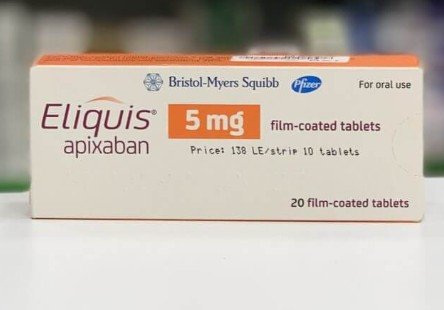
Eliquis 5 mg 20 tablets

Available at Pharmaegy Pharmacy. Use as directed by your doctor.

Eliquis 5 mg 20 film-coated tablets Properties: Eliquis contains the active substance apixaban and belongs to a group of medicines called anticoagulants. This medicine helps to prevent blood clots from forming by blocking Factor Xa, which is an important component of blood clotting. Indications: -Prevention of a blood clot from forming in the heart in patients with an irregular heart beat (atrial fibrillation) and at least one additional risk factor. Blood clots may break off and travel to the brain and lead to a stroke or to other organs and prevent normal blood flow to that organ (also known as a systemic embolism). A stroke can be life-threatening and requires immediate medical attention. -Treatment of blood clots in the veins of your legs (deep vein thrombosis) and in the blood vessels of your lungs (pulmonary embolism), and to prevent blood clots from reoccurring in the blood vessels of your legs and/or lungs. Dosage and administration: Take this medication by mouth with or without food as directed by your doctor, usually twice daily (every 12 hours). If you cannot swallow the tablet whole, you may crush the tablet and mix with water, apple juice, or applesauce and take it right away. The dosage is based on your medical condition, age, weight, kidney function, response to treatment, and other medications you may be taking. Be sure to tell your doctor and pharmacist about all the products you use (including prescription drugs, nonprescription drugs, and herbal products). If you are taking apixaban to prevent blood clots from forming after surgery, the length of treatment is based on the type of surgery that you had. Side effects: The most common general side effect of this medicine is bleeding which may be potentially life threatening and require immediate medical attention. Common: Bleeding including: in your eyes; in your stomach or bowel; from your rectum; blood in the urine; from your nose; from your gums; bruising and swelling; Anemia which may cause tiredness or paleness; Low blood pressure which may make you feel faint or have a quickened heartbeat; Nausea (feeling sick); Blood tests may show: an increase in gamma-glutamyltransferase (GGT) Contraindications: Hypersensitivity to the active substance or to any of the excipients Active clinically significant bleeding. Hepatic disease associated with coagulopathy and clinically relevant bleeding risk. Lesion or condition if considered a significant risk factor for major bleeding. This may include current or recent gastrointestinal ulceration, presence of malignant neoplasms at high risk of bleeding, recent brain or spinal injury, recent brain, spinal or ophthalmic surgery, recent intracranial hemorrhage, known or suspected esophageal varices, arteriovenous malformations, vascular aneurysms or major intraspinal or intracerebral vascular abnormalities. Concomitant treatment with any other anticoagulant agent e.g., unfractionated heparin (UFH), low molecular weight heparins (enoxaparin, dalteparin, etc.), heparin derivatives (fondaparinux, etc.), oral anticoagulants (warfarin, rivaroxaban, dabigatran, etc.) except under specific circumstances of switching anticoagulant therapy, when UFH is given at doses necessary to maintain an open central venous or arterial catheter or when UFH is given during catheter ablation for atrial fibrillation. Warnings and precautions: -Before taking apixaban, tell your doctor or pharmacist if you are allergic to it; or if you have any other allergies. -Before using this medication, tell your doctor or pharmacist your medical history, especially of: liver disease, kidney disease, bleeding problems (such as bleeding of the stomach/intestines, bleeding in the brain), blood disorders (such as anemia, hemophilia, thrombocytopenia), recent major injury/surgery, stroke, a certain clotting disorder (antiphospholipid syndrome), frequent falls/injuries. Do not stop taking this medication without consulting your doctor. Some conditions may become worse when this drug is suddenly stopped. This medication can cause serious bleeding if it affects your blood clotting proteins too much. Tell your doctor right away if you have any signs of serious bleeding, including: unusual pain/swelling/discomfort, unusual bruising, prolonged bleeding from cuts or gums, persistent/frequent nosebleeds, unusually heavy/prolonged menstrual flow, pink/dark urine, coughing up blood, vomit that is bloody or looks like coffee grounds, severe headache, dizziness/fainting, unusual or persistent tiredness/weakness, bloody/black/tarry stools, difficulty swallowing. Get medical help right away if you have any signs of very serious bleeding, including: vision changes, confusion, trouble speaking, weakness on one side of the body. During pregnancy, this medication should be used only when clearly needed. Apixaban may increase the risk of bleeding in the pregnant woman, the unborn baby, and the newborn baby. Discuss the risks and benefits with your doctor. Your doctor may switch the type of medication you use during pregnancy. It is unknown if this medication passes into breast milk. Because of the possible risk to the infant, breast-feeding while using this drug is not recommended. Consult your doctor before breast-feeding. Storage: Store at a temperature not exceeding 30°C Package: Carton box holds 2 strips each of 10 film-coated tablets and paper instructions

Eliquis 5 mg 20 tablets


Description

Eliquis 5 mg 20 film-coated tablets Properties: Eliquis contains the active substance apixaban and belongs to a group of medicines called anticoagulants. This medicine helps to prevent blood clots from forming by blocking Factor Xa, which is an important component of blood clotting. Indications: -Prevention of a blood clot from forming in the heart in patients with an irregular heart beat (atrial fibrillation) and at least one additional risk factor. Blood clots may break off and travel to the brain and lead to a stroke or to other organs and prevent normal blood flow to that organ (also known as a systemic embolism). A stroke can be life-threatening and requires immediate medical attention. -Treatment of blood clots in the veins of your legs (deep vein thrombosis) and in the blood vessels of your lungs (pulmonary embolism), and to prevent blood clots from reoccurring in the blood vessels of your legs and/or lungs. Dosage and administration: Take this medication by mouth with or without food as directed by your doctor, usually twice daily (every 12 hours). If you cannot swallow the tablet whole, you may crush the tablet and mix with water, apple juice, or applesauce and take it right away. The dosage is based on your medical condition, age, weight, kidney function, response to treatment, and other medications you may be taking. Be sure to tell your doctor and pharmacist about all the products you use (including prescription drugs, nonprescription drugs, and herbal products). If you are taking apixaban to prevent blood clots from forming after surgery, the length of treatment is based on the type of surgery that you had. Side effects: The most common general side effect of this medicine is bleeding which may be potentially life threatening and require immediate medical attention. Common: Bleeding including: in your eyes; in your stomach or bowel; from your rectum; blood in the urine; from your nose; from your gums; bruising and swelling; Anemia which may cause tiredness or paleness; Low blood pressure which may make you feel faint or have a quickened heartbeat; Nausea (feeling sick); Blood tests may show: an increase in gamma-glutamyltransferase (GGT) Contraindications: Hypersensitivity to the active substance or to any of the excipients Active clinically significant bleeding. Hepatic disease associated with coagulopathy and clinically relevant bleeding risk. Lesion or condition if considered a significant risk factor for major bleeding. This may include current or recent gastrointestinal ulceration, presence of malignant neoplasms at high risk of bleeding, recent brain or spinal injury, recent brain, spinal or ophthalmic surgery, recent intracranial hemorrhage, known or suspected esophageal varices, arteriovenous malformations, vascular aneurysms or major intraspinal or intracerebral vascular abnormalities. Concomitant treatment with any other anticoagulant agent e.g., unfractionated heparin (UFH), low molecular weight heparins (enoxaparin, dalteparin, etc.), heparin derivatives (fondaparinux, etc.), oral anticoagulants (warfarin, rivaroxaban, dabigatran, etc.) except under specific circumstances of switching anticoagulant therapy, when UFH is given at doses necessary to maintain an open central venous or arterial catheter or when UFH is given during catheter ablation for atrial fibrillation. Warnings and precautions: -Before taking apixaban, tell your doctor or pharmacist if you are allergic to it; or if you have any other allergies. -Before using this medication, tell your doctor or pharmacist your medical history, especially of: liver disease, kidney disease, bleeding problems (such as bleeding of the stomach/intestines, bleeding in the brain), blood disorders (such as anemia, hemophilia, thrombocytopenia), recent major injury/surgery, stroke, a certain clotting disorder (antiphospholipid syndrome), frequent falls/injuries. Do not stop taking this medication without consulting your doctor. Some conditions may become worse when this drug is suddenly stopped. This medication can cause serious bleeding if it affects your blood clotting proteins too much. Tell your doctor right away if you have any signs of serious bleeding, including: unusual pain/swelling/discomfort, unusual bruising, prolonged bleeding from cuts or gums, persistent/frequent nosebleeds, unusually heavy/prolonged menstrual flow, pink/dark urine, coughing up blood, vomit that is bloody or looks like coffee grounds, severe headache, dizziness/fainting, unusual or persistent tiredness/weakness, bloody/black/tarry stools, difficulty swallowing. Get medical help right away if you have any signs of very serious bleeding, including: vision changes, confusion, trouble speaking, weakness on one side of the body. During pregnancy, this medication should be used only when clearly needed. Apixaban may increase the risk of bleeding in the pregnant woman, the unborn baby, and the newborn baby. Discuss the risks and benefits with your doctor. Your doctor may switch the type of medication you use during pregnancy. It is unknown if this medication passes into breast milk. Because of the possible risk to the infant, breast-feeding while using this drug is not recommended. Consult your doctor before breast-feeding. Storage: Store at a temperature not exceeding 30°C Package: Carton box holds 2 strips each of 10 film-coated tablets and paper instructions

Highlights

  • .

  • .

Directions for use

Storage

Administration Instructions

Warning

Precaution

Eliquis 5 mg 20 tablets

EGP 532.00 EGP 691.6 23% off

In stock
  • SKU
  • Pack Size
  • Unit Count
  • Country
  • Free Shipping
    For orders from $50
  • Support 24/7
    Call us any time
  • 100% Safety
    Only secure payments
  • Hot Offers
    Discounts up to 90%